EMC and RF Testing in Real Environments
Laboratory EMC Testing Versus Real-World Installations
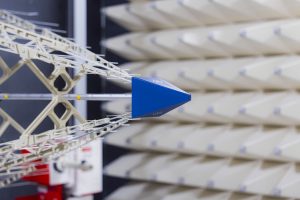
Electromagnetic compatibility testing is built on the principle of repeatability. Laboratories rely on controlled environments such as semi-anechoic chambers or open area test sites to ensure that measurements are consistent, traceable, and comparable across different products and test campaigns. These environments simulate free-space conditions where emissions can be measured in a predictable and standardized way, forming the foundation of modern EMC testing.
However, real-world installations are rarely so ideal. Many modern devices are designed to operate in environments that fundamentally alter electromagnetic behavior. Equipment may be installed underground in pits, embedded within concrete structures, enclosed in metallic housings, or even deployed underwater. In these situations, the physical environment surrounding the equipment becomes part of the electromagnetic system, influencing how energy propagates, attenuates, or escapes, which directly impacts RF testing results.
This creates a practical and often misunderstood question in compliance engineering: how can a device be tested in a laboratory environment that does not resemble its actual installation, and still be considered compliant? The answer is not simply technical. It involves regulatory interpretation, engineering judgment, and careful documentation aligned with global product compliance requirements.
The key point is that EMC compliance is not only about the test setup. It is also about whether the test configuration, installation assumptions, and technical justification properly represent the product’s intended use.
The Disconnect Between Laboratory Conditions and Real Installations
Standard EMC testing assumes that the equipment under test is placed in an environment where emissions can radiate freely. The measurement setup is defined with strict parameters, including antenna distance, height variation, polarization, and azimuth rotation. These parameters are designed to capture the maximum possible emissions under controlled conditions, such as those used in radiated emission testing.
When a device is installed underground or within dense materials such as concrete or water, the situation changes significantly. These materials introduce attenuation, absorption, and in some cases shielding effects. Metallic enclosures may behave like partial or full Faraday cages, while soil and water act as lossy media that reduce signal propagation. As a result, the emissions observed in a laboratory may not represent what actually occurs in the field.
At first glance, this might suggest that laboratory testing is no longer valid. In practice, the opposite is true. Laboratory testing remains essential, but its interpretation must be adapted to reflect the intended use of the equipment. Understanding these nuances is part of mastering key concepts found in the EMC and wireless testing glossary.
The FCC Approach Under Part 15
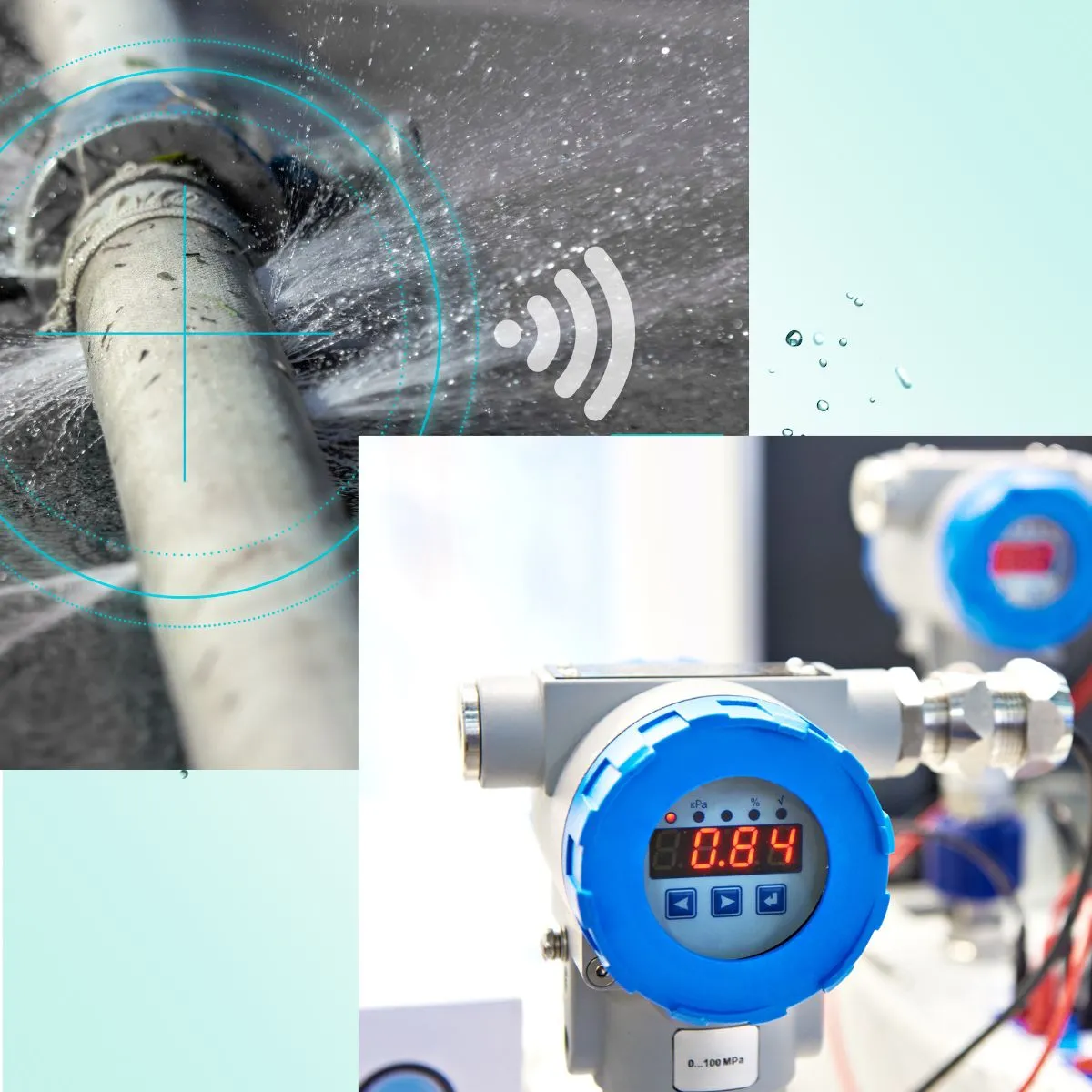
A well-established interpretation under FCC Part 15 addresses this exact scenario, particularly for devices such as water meter transceivers installed in underground pits. These devices operate within environments that significantly attenuate RF emissions, often using enclosures made of concrete, plastic, or metal.
The FCC allows such devices to be tested in a conventional laboratory setup rather than requiring testing within an actual underground installation. This is a pragmatic decision, as reproducing every possible installation scenario would be impractical and inconsistent. However, this flexibility comes with an important condition: the authorization granted to the device is no longer universal.
Instead, the approval becomes tied to the specific installation scenario described in the application. The device is effectively certified for use only within the conditions under which it was evaluated and documented. This means that if the device was tested assuming installation in a buried pit with specific materials, it cannot be freely marketed for use in open-air or different configurations without further evaluation.
This approach shifts the responsibility from purely measurement-based compliance to a combination of testing and controlled deployment. The manufacturer must ensure that the installation conditions are clearly defined, and that the product is used accordingly.
Another important aspect is that while the installation environment may differ, the rigor of the measurement process must not be reduced. The receiving antenna must still be scanned vertically, typically between one and four meters, and measurements must be performed across multiple azimuth angles to ensure that peak emissions are not missed.
Understanding the Engineering Reality
From an engineering perspective, the behavior of RF emissions in non-standard environments is governed by well-known physical principles. Water, soil, and concrete introduce significant losses, especially at higher frequencies. As frequency increases, penetration depth decreases, meaning that signals are more rapidly attenuated.
Metallic enclosures introduce a different effect. Rather than simply attenuating signals, they can reflect and contain electromagnetic energy, creating resonance or leakage points depending on the structure. Openings, seams, and connected cables often become the primary paths through which energy escapes.
What is important to recognize is that the installation environment does not simply reduce emissions in a uniform way. It alters the entire emission profile of the device, sometimes introducing new coupling mechanisms that were not present in free-space testing.
| Installation Environment | Typical EMC/RF Effect | Compliance Consideration |
|---|---|---|
| Underground pit | RF attenuation through soil, concrete, or enclosure material | Installation assumptions must be clearly documented. |
| Concrete structure | Absorption, attenuation, and possible reinforcement-related shielding | Representative or worst-case configuration may be needed. |
| Metallic enclosure | Shielding, reflection, resonance, and leakage through seams or cables | Cables and apertures may dominate emissions. |
| Underwater deployment | Strong attenuation and altered propagation behavior | Laboratory results require careful engineering interpretation. |
The European CE Marking Perspective
Under the European EMC Directive, the philosophy is slightly different but ultimately leads to a similar conclusion. Equipment must comply within its intended use conditions. Harmonized standards provide test methods and limits, but rely on representative configurations rather than defining every installation scenario explicitly.
When a device is intended to be installed in a non-standard environment, this must be clearly described in the technical documentation. The test configuration should either replicate these conditions or represent a justified worst-case scenario, supported by engineering reasoning.
Bridging the Gap Between Testing and Reality
In practice, experienced laboratories adopt a hybrid approach. Standard laboratory testing is performed first to establish compliance under controlled conditions. This is then complemented with additional evaluation to understand the impact of real-world installation environments.
The final and most critical step is documentation. The test report must clearly describe assumptions, configurations, and limitations. If compliance depends on installation conditions, this must be explicitly stated and reflected in installation instructions.
For non-standard installations, the strongest compliance file is usually the one that combines standardized EMC test data, a clear technical rationale, defined installation limits, and practical instructions for the end user or installer.
Frequently Asked Questions
Can underground equipment be tested for EMC in a standard laboratory?
Yes. Equipment intended for underground installation can often be tested in a standard EMC laboratory, provided the intended installation conditions are clearly documented and the test configuration is technically justified.
Does soil, concrete, or water reduce RF emissions?
Yes. Soil, concrete, and water can attenuate RF energy, especially at higher frequencies. However, these materials may also change the radiation pattern and coupling paths, so the effect is not always a simple uniform reduction.
Can FCC Part 15 devices be certified for specific installation conditions?
Yes. In some cases, FCC authorization may be tied to a specific documented installation scenario, such as an underground meter pit or enclosed installation. If the product is used outside that configuration, additional evaluation may be required.
Why is documentation important for non-standard EMC installations?
Documentation connects the laboratory test setup to the real-world use case. It explains the intended environment, assumptions, limitations, and installation conditions that support the compliance conclusion.
How does CE marking handle unusual installation environments?
For CE marking, the product must comply under its intended use conditions. If the installation environment affects EMC behavior, the technical file should justify the selected test configuration and describe any installation-related compliance assumptions.
What should manufacturers include in installation instructions?
Manufacturers should describe any installation conditions required for compliance, such as enclosure type, mounting location, cable routing, grounding, shielding, separation distances, or environmental assumptions.
Conclusion
When the installation medium differs from the laboratory environment, compliance becomes more nuanced but remains achievable. The device is evaluated not as an isolated system, but as part of a broader electromagnetic environment.
Regulatory frameworks recognize this reality by allowing flexibility in testing, provided that it is supported by proper justification and thorough documentation. Ultimately, EMC compliance is not just about passing a test. It is about ensuring reliable performance in the real-world conditions where the product will operate.