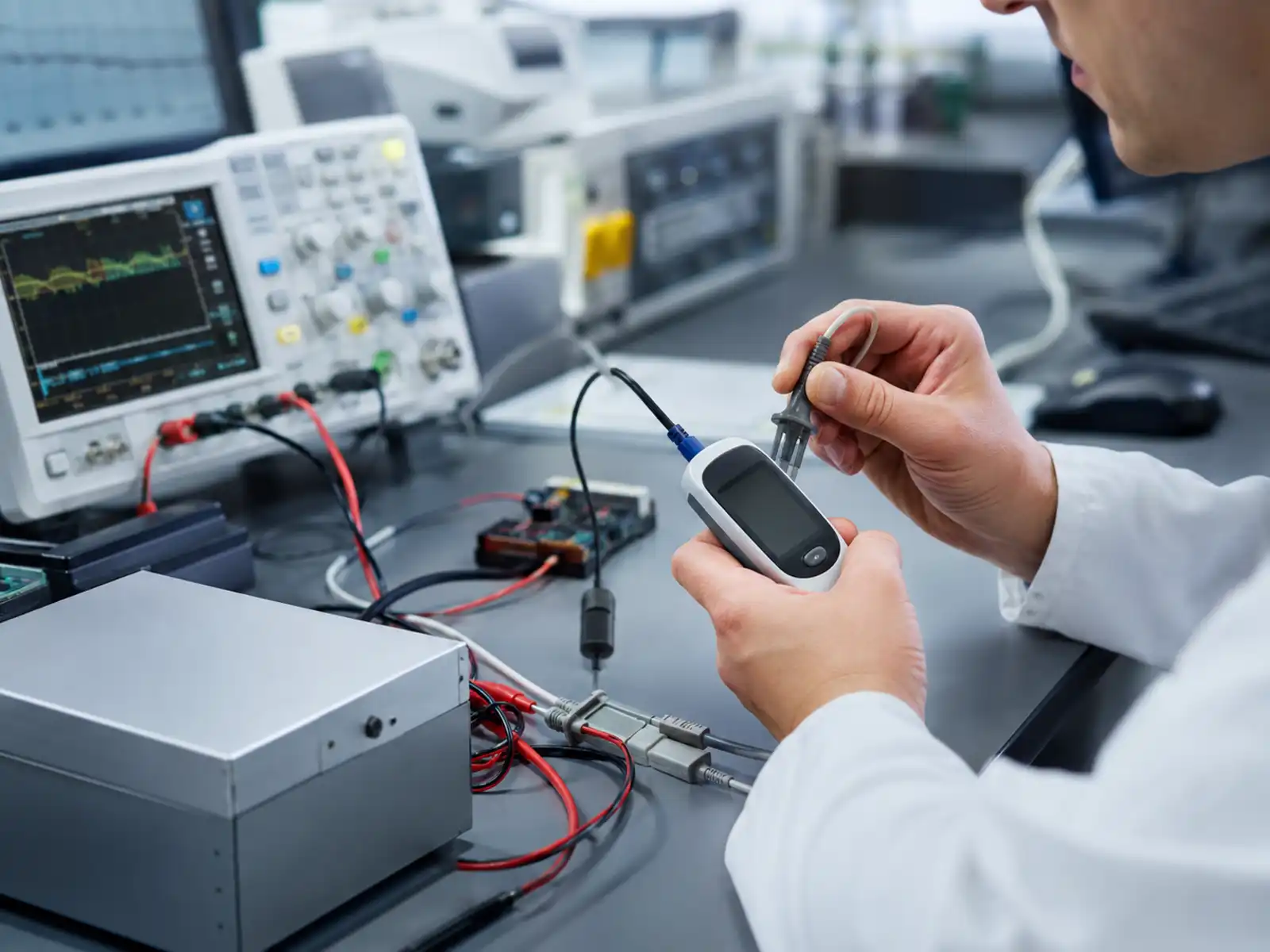
Professional Healthcare Facilities
We plan representative configurations for equipment used in clinical settings. Sensors, applied parts, external supplies and interconnected equipment are considered when defining the system under test.
MEDICAL ELECTRICAL EQUIPMENT & SYSTEMS
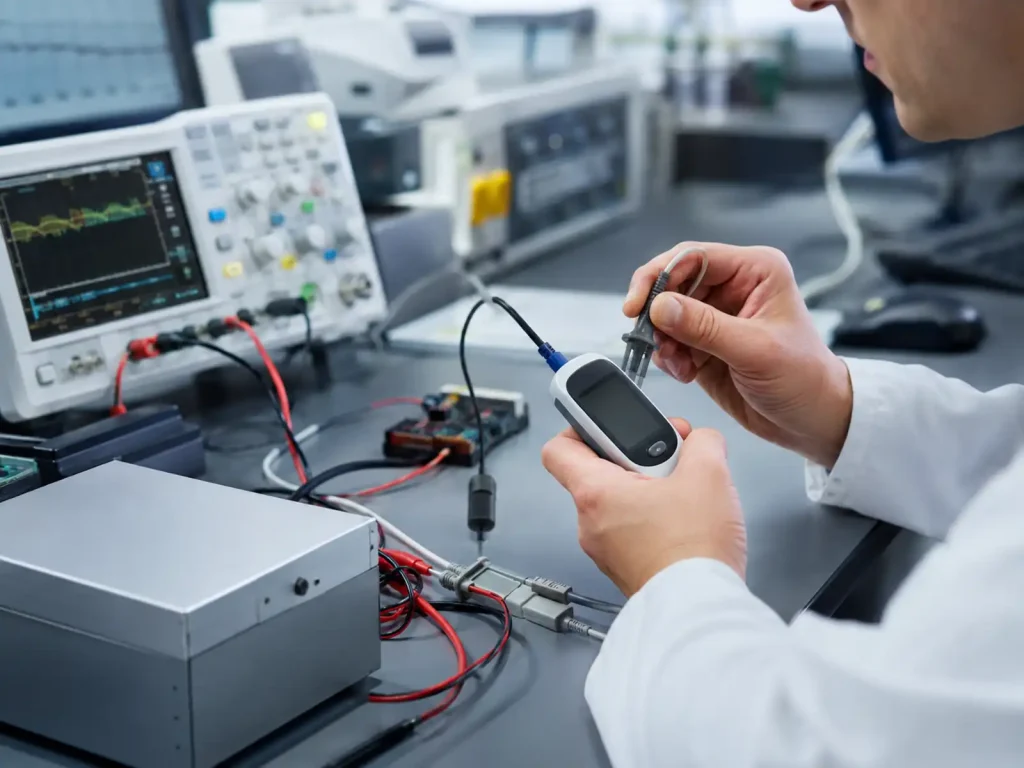
Stancer Testing-Lab provides medical device electromagnetic compatibility (EMC) testing for manufacturers developing medical electrical equipment for international markets. From a compact monitor to a complete medical electrical system, we evaluate emissions and immunity in configurations that reflect the device’s intended use. Testing takes place at our laboratory in Laval, Quebec, with operating modes, accessories and performance monitoring agreed before the program begins.
Our A2LA accreditation to ISO/IEC 17025:2017, certificate 7352.01, includes IEC 60601-1-2 and BS EN/EN 60601-1-2, together with the emissions and immunity methods listed below. We agree the required edition, configurations and monitoring arrangements before testing.
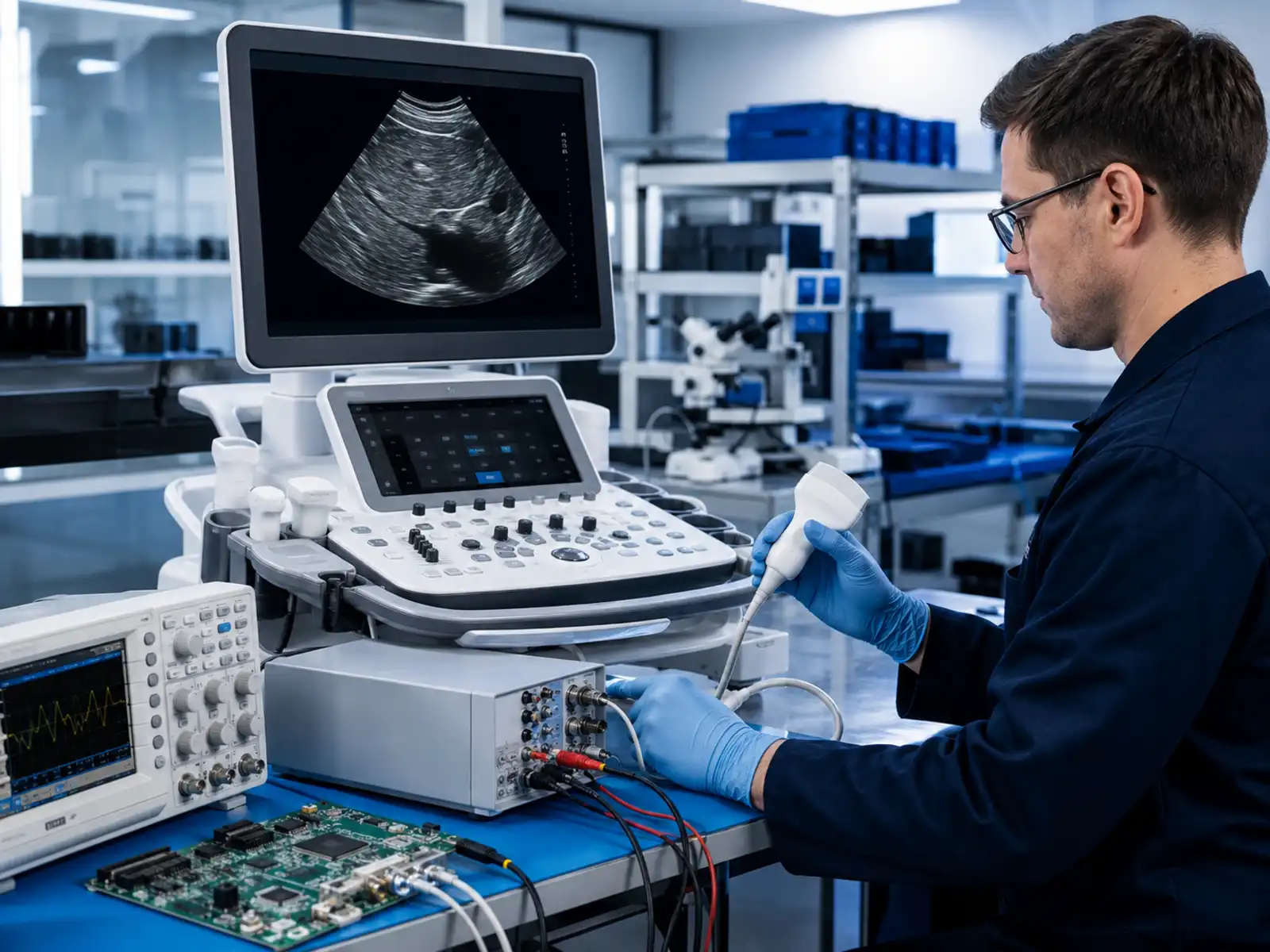
IEC 60601-1-2 addresses electromagnetic disturbances affecting the basic safety and essential performance of medical electrical equipment and systems, as well as the disturbances they emit. An appropriate test program considers the complete device, its accessories and its intended electromagnetic environment.
We plan representative configurations for equipment used in clinical settings. Sensors, applied parts, external supplies and interconnected equipment are considered when defining the system under test.
Home-use products and devices intended for special environments need an appropriate test plan. The intended environment influences the applicable disturbance levels, configurations and acceptance criteria.
The consolidated IEC 60601-1-2 Edition 4.1 incorporates the 2020 amendment. We confirm the applicable version and market requirements for your project. Review our IEC 60601-1-2 standards guide for background.
Medical device emissions testing measures electromagnetic disturbances produced by the equipment. Medical device immunity testing evaluates its response to applied disturbances while the agreed functions are monitored. Stancer’s scope lists the following product and basic test standards. We select the required matrix from the applicable product standard, intended environment and device ports; not every listed method applies to every device.
| Evaluation | Standard / method |
|---|---|
| Medical electrical equipment EMC | IEC 60601-1-2; BS EN/EN 60601-1-2 |
| Conducted & radiated emissions | CISPR 11, as applicable through the medical EMC requirements |
| Harmonic current emissions | IEC 61000-3-2 |
| Voltage fluctuations & flicker | IEC 61000-3-3 |
| Electrostatic discharge (ESD) | IEC 61000-4-2 |
| Radiated RF immunity | IEC 61000-4-3 |
| Electrical fast transients / burst | IEC 61000-4-4 |
| Surge immunity | IEC 61000-4-5 |
| Conducted RF immunity | IEC 61000-4-6 |
| Power-frequency magnetic fields | IEC 61000-4-8 |
| AC voltage dips & interruptions | IEC 61000-4-11 |
| IVD equipment, where applicable | IEC 61326-2-6; BS EN/EN 61326-2-6 |
RF proximity-field tests and any proximity magnetic-field requirements are addressed in the agreed matrix. Availability and accreditation coverage for additional methods, including IEC 61000-4-39, are confirmed individually before booking.
Review our accreditation and scope information. For in vitro diagnostic equipment, we confirm the relevant IEC 61326 requirements rather than assuming the same program as other medical electrical equipment.
The manufacturer identifies essential performance and supplies device-specific acceptance criteria. Our engineers help translate those criteria into practical monitoring arrangements for the laboratory. The plan should define measurable limits, operating modes and how a disturbance response will be observed.
Depending on the device, monitoring may track measurement accuracy, therapy output, alarms, communication or control functions. Representative loads, patient simulators and accessories help exercise the functions under evaluation. We agree how behaviour during and after exposure will be recorded before formal testing starts.
Our SAC PLUS chamber, automated antenna positioning and turntable, Rohde & Schwarz instrumentation, LISNs and RF immunity systems support controlled measurements. Cable routing, auxiliary equipment and monitoring connections are reviewed as part of the setup.
An RFI trap cable feedthrough supports external connections through the chamber wall. Built-in filtering and additional setup filtering, where appropriate, help manage external conducted noise. See our laboratory capabilities for equipment and chamber details.
Bluetooth, Wi-Fi, cellular and other radio functions introduce separate wireless compliance requirements alongside medical EMC testing. We can coordinate RF and wireless evaluation with the device’s EMC program, using the applicable methods in our scope.
Market requirements may include FCC testing for the United States and ISED testing for Canada. Radio regulatory testing and EMC immunity testing address different questions; wireless coexistence requirements are reviewed separately for the intended application.
EMC reports contribute to the technical evidence for a medical-device submission. We agree the tested configuration, applied methods, performance monitoring and reporting requirements with your team. Review our FDA EMC guidance overview and the FDA’s official guidance when planning a U.S. submission.
Where your program also requires IEC 60601-1 electrical safety evaluation, Stancer can coordinate testing through a qualified partner. The quotation identifies the performing laboratory and its relevant coverage. Medical EMC testing supports the broader conformity program; it does not itself grant medical-device approval or establish all electrical safety requirements.
Use our medical EMC test preparation checklist to organize the device configuration, accessories, operating instructions and monitoring arrangements. A documented medical device EMC test plan helps your team and the laboratory agree what will be tested and how performance will be assessed.
Also send equipment dimensions, mass, power requirements and your preferred schedule. Discuss model variants and accessory combinations early so the test plan can address the configurations that matter.
Cost depends on the required standard edition and test matrix, operating modes, accessories, device ports and monitoring arrangements. Setup complexity, model variants and any troubleshooting or retesting also affect the work. Send your device description, intended use environment, target markets and performance criteria for a medical device EMC testing quote based on the agreed program.
The plan should identify the device and tested configuration, applicable standards and editions, intended environment, operating modes, accessories and cable arrangements. It should also document the manufacturer’s acceptance criteria and how the relevant functions will be monitored during and after immunity testing. Agree these details before testing so the results can be interpreted against the documented configuration and criteria.
Yes. Our A2LA scope, certificate 7352.01, lists IEC 60601-1-2 and BS EN/EN 60601-1-2. We confirm the applicable edition and required test matrix for your device in the quotation.
Home healthcare EMC testing is planned around the device’s intended environment and the applicable standard requirements. Tell us whether the device is intended for professional healthcare, home healthcare or a special environment so we can agree the relevant disturbance levels, configurations and monitoring arrangements.
The manufacturer defines essential performance using its device-specific risk evaluation. Stancer helps implement the agreed monitoring and acceptance criteria during EMC testing.
No. It supplies evidence for the applicable regulatory process. Approval, clearance or authorization depends on the device and the complete submission.
Yes. We can coordinate applicable EMC and RF testing at Stancer and electrical safety testing through a qualified partner, with responsibilities and coverage identified in the proposed program.
Yes. Pre-compliance evaluation and troubleshooting can investigate emissions, immunity responses, cables, grounding, shielding or filtering before the formal test sequence.
Send your device description, intended environment and target markets. Our engineers will help establish the test setup, monitoring requirements and reporting plan.
Use our checklist to prepare your documents, samples, operating modes and monitoring arrangements before testing.
Plan your testing
Tell us about your product and target markets. Our technical team will help clarify the testing scope and prepare a tailored quotation.