

Harmonic and Flicker Testing
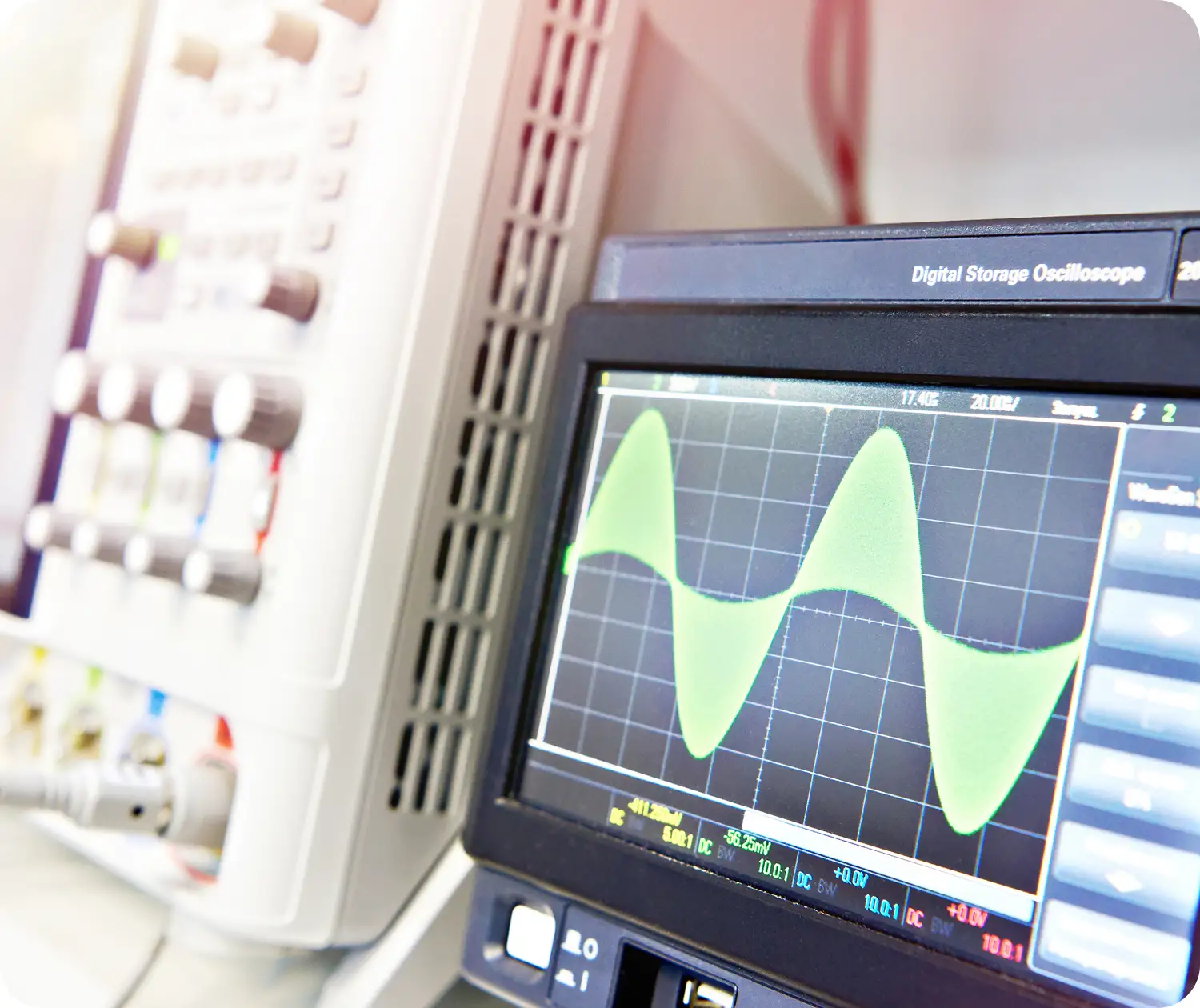
Harmonic Current and Voltage Flicker Testing
Harmonic and flicker testing measures disturbances that electrical equipment introduces into its AC supply. Harmonic current measurements evaluate distortion in the input current; voltage fluctuation and flicker measurements evaluate the effect of changing loads on the supply.
Stancer Testing-Lab provides these evaluations within a product-specific EMC testing program for single-phase and three-phase equipment. We review the equipment rating, operating cycle, supply conditions and applicable standards before defining the test plan.
What These Tests Help You Evaluate
Harmonic Current Emissions
Measure individual harmonic components and compare the results with the applicable limits and equipment classification.
Voltage Changes and Flicker
Evaluate load-related voltage changes and the required flicker parameters under defined supply and reference-impedance conditions.
Design Changes and Documentation
Compare power-supply and control changes, then document the tested configuration and results for the relevant conformity program.
Standards, Capabilities and Test Planning
Voltage Flicker
Short-term and long-term flicker severity, Pst and Plt, and the required voltage-change parameters are evaluated where applicable.Single- and Three-Phase
Supply and measurement configurations are reviewed against the published 32 A setup and the applicable test method.Which Standard Applies?
The equipment current rating is one selection factor. Supply characteristics, product classification, operating conditions and connection restrictions also matter. The table summarizes the standards; it does not extend the laboratory setup to every current covered by a standard.| Standard | Evaluation | Selection guide |
|---|---|---|
| IEC/EN 61000-3-2 | Harmonic current emissions | Equipment rated up to and including 16 A per phase, within the applicable supply and product conditions. |
| IEC/EN 61000-3-12 | Harmonic current emissions | Equipment rated above 16 A and up to 75 A per phase, subject to the standard's supply and connection requirements. |
| IEC/EN 61000-3-3 | Voltage changes, fluctuations and flicker | Equipment rated up to 16 A per phase and not subject to conditional connection, within the specified supply conditions. |
| IEC/EN 61000-3-11 | Voltage changes, fluctuations and flicker | Equipment rated up to 75 A and subject to conditional connection; connection conditions must be assessed. |
Our Test Sequence
- Define. Review the product, current rating, supply and required standards.
- Configure. Establish the source, measurement arrangement and representative operating cycle.
- Measure. Record the required harmonic components or voltage fluctuation and flicker parameters.
- Assess. Compare results against the applicable limits and connection conditions.
- Report. Document the equipment configuration, test conditions, results and assessment.
Prepare Your Product for Testing
Provide the rated current, voltage, frequency and phase configuration, along with the product function, operating cycles and target markets. Bring representative power supplies, cables, loads and controls needed to reproduce normal and relevant worst-case operation. Use our client information sheet to organize the details. For investigations before formal testing, see EMC pre-compliance testing.Power-Quality Immunity Is a Separate Evaluation
IEC 61000-4-13 addresses immunity to harmonics and interharmonics, while IEC 61000-4-14 addresses voltage fluctuation immunity. These evaluate the product's response to applied disturbances, rather than emissions produced by the product. Their published methods have input-current scope limits up to 16 A per phase. We review any requested immunity program separately against the applicable method and accreditation scope. A power-source rating is not, by itself, evidence that a product falls within a standard or that every test condition is available.Harmonic and Flicker Testing FAQs
What is the difference between harmonic and flicker testing?
Harmonic testing evaluates current components at multiples of the supply frequency. Flicker testing evaluates voltage fluctuations associated with changing loads and their potential to cause lighting flicker.
Does passing emissions testing prove power-quality immunity?
No. Emissions measurements evaluate disturbances produced by the equipment. Immunity testing applies disturbances and monitors the equipment's response. The two require separate test plans.
Can Stancer test equipment above 16 A?
The published harmonic and flicker emissions setup supports equipment up to 32 A, including three-phase configurations. Share your per-phase current, supply and operating load so we can confirm the appropriate setup. The broader limits in a standard do not define the laboratory's equipment capacity.
Are harmonic and flicker results relevant to CE marking?
They can support an applicable CE marking compliance program when those requirements apply to the product. These results form part of the technical evidence and do not establish complete product conformity on their own.
Plan your testing
Let’s move your product toward market.
Tell us about your product, testing needs, and target markets. Our technical team will help define the scope and prepare a tailored quotation.