

Conducted Transient, EFT/Burst & Surge Testing

Conducted Transient, EFT/Burst & Surge Testing

Conducted transient testing evaluates how electronic equipment responds to short electrical disturbances entering through power, signal and control connections. Stancer Testing-Lab provides electrical fast transient (EFT/burst), surge immunity and ring-wave testing as part of a product-specific EMC testing program.

We agree the ports, operating modes, disturbance levels and performance criteria before testing, then monitor for resets, communication errors, loss of function and damage. Our ISO/IEC 17025 accreditation and scope identify the covered methods; the applicable edition, configuration and accredited coverage are confirmed for your project.

Request a quote

What Transient Testing Helps You Evaluate

Power and Signal Interfaces

Identify which connections and operating modes are susceptible to switching-related disturbances and induced overvoltages.

Protection and Filtering

Compare the response of a complete product before and after changes to protective devices, filters, grounding or cable arrangements.

Documented Performance

Record observed behaviour against agreed criteria to support engineering decisions and the applicable product compliance program.

Three Transient Test Methods

01

EFT/Burst — IEC/EN 61000-4-4

Electrical fast transient testing applies repetitive bursts of fast pulses to evaluate immunity to disturbances associated with switching events. The coupling arrangement depends on the port and test method.

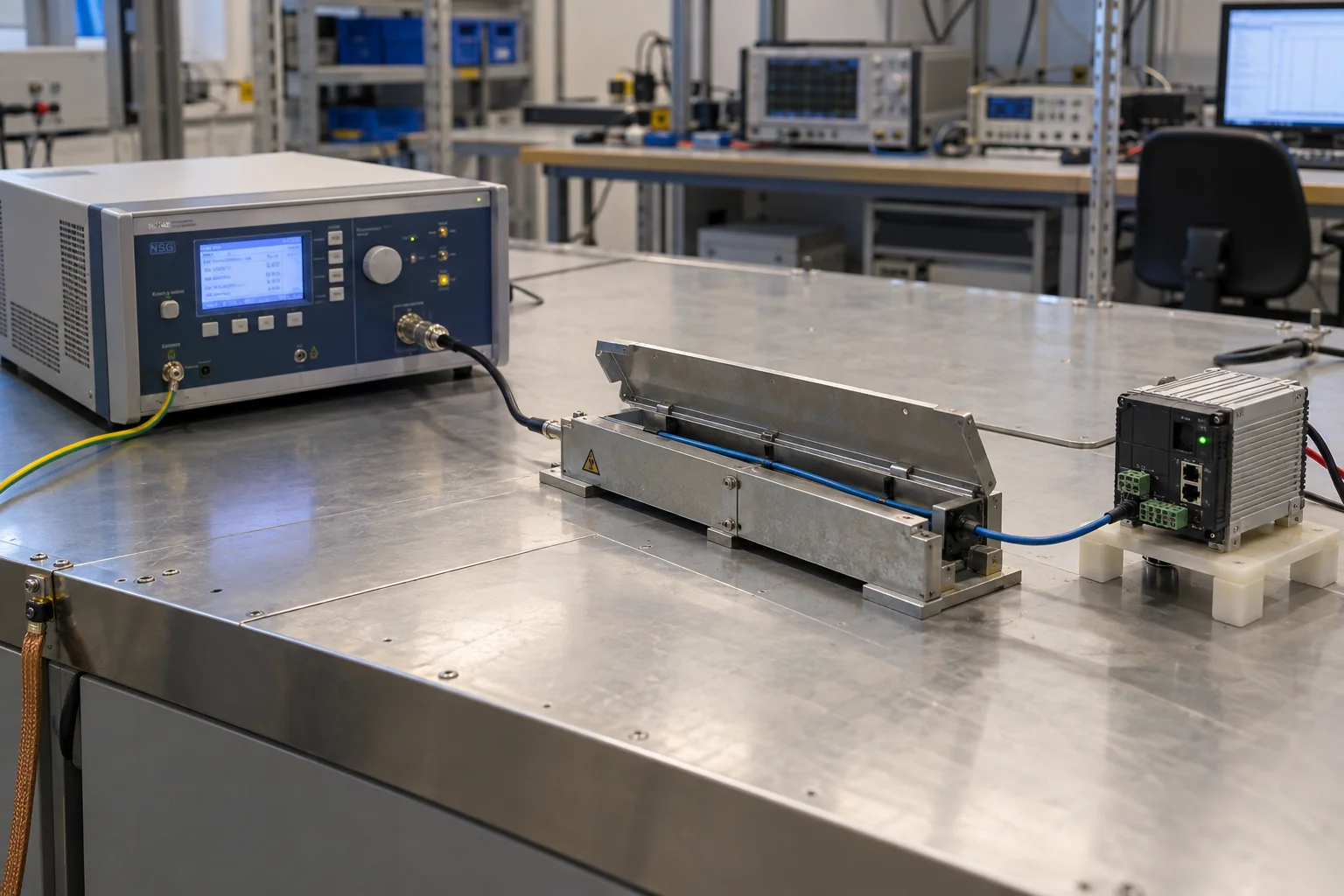
Stancer has single-phase and three-phase coupling/decoupling networks rated up to 32 A and an EFT generator with output capability up to 7 kV. These equipment ratings do not mean that every product is tested at 7 kV or that every coupling arrangement supports that level. We confirm the required level, EUT current and setup before booking.

02

Surge — IEC/EN 61000-4-5

Surge immunity testing evaluates equipment exposed to specified overvoltage impulses associated with switching and lightning-induced effects. Power and signal ports may require different coupling arrangements and source impedances.

We select the waveform, coupling paths, polarity and applicable timing from the agreed test plan. Generator voltage alone does not describe the full test severity. This method does not represent a direct lightning strike to the product.

03

Ring Wave — IEC/EN 61000-4-12

Ring-wave immunity testing evaluates the response to specified oscillatory transients on low-voltage power, control and signal connections. It complements other transient methods when required by the product standard or specification.

The required ports, waveform, test levels and coupling configuration are reviewed separately from EFT/burst and surge. Passing one method does not demonstrate immunity to the others.

From Test Plan to Report

  1. Define. Identify the product standard, ports, operating modes and acceptance criteria.
  2. Configure. Select the generator, coupling method, reference arrangement and monitoring.
  3. Apply. Perform the specified disturbance sequence, including levels, polarity and timing.
  4. Monitor. Observe product behaviour during and after exposure, including recovery.
  5. Report. Document the configuration, applied conditions, observations and assessment.

Product Requirements and Accreditation

IEC/EN 61000-4-4, IEC/EN 61000-4-5 and IEC/EN 61000-4-12 describe basic immunity methods. The applicable product or product-family standard determines which tests, ports, levels and performance criteria are required. For medical electrical equipment, these requirements are evaluated within the applicable IEC 60601-1-2 EMC program.

Test reports can support CE marking compliance and other conformity routes where the results are relevant. A transient test alone does not establish complete product compliance. Review our accreditation information for the applicable scope.

Automated manufacturing system with electronic control equipment
Test configurations and monitoring are selected for the applicable product and disturbance method.

Prepare Your Product for Testing

Send the product specification, target markets, applicable standards and required test levels. Include the supply voltage and current, port list, cable lengths, grounding arrangement, accessories and operating modes.

Provide suitable monitoring for essential functions and agree how resets, communication errors and recovery will be assessed. Bring representative cables, loads, power supplies and any equipment needed to operate the sample.

Use our EMC & RF client information sheet to organize the details, or discuss your test plan with our team.

Conducted Transient Testing FAQs

What is the difference between EFT/burst and surge testing?

EFT/burst uses repetitive fast pulses. Surge testing uses specified impulses with different waveform and source characteristics. They evaluate different disturbances and may both be required.

Is conducted transient testing the same as conducted RF immunity?

No. Conducted RF immunity testing applies radio-frequency disturbances through defined coupling methods. EFT, surge and ring-wave tests apply transient waveforms.

Which test levels does my product need?

The applicable product standard, installation environment, port type and customer specification determine the required levels and criteria. We review those requirements against the available setup and accreditation scope before testing.

Can you help investigate a failed transient test?

Yes. Pre-compliance investigations can compare protection, filtering, grounding and cable changes. The configuration and observed response are documented; improvement remains specific to the product.

Automotive Electrical Supply Tests

Automotive supply disturbances require a separate test plan.

ISO 16750-2

ISO 16750-2 addresses electrical loads such as supply variations and starting conditions.

ISO 7637-2

ISO 7637-2 addresses specified conducted transients on vehicle supply lines.

The required edition, pulse or profile, severity, operating state and acceptance criteria must be identified for the equipment.

Discuss these requirements through our automotive EMC testing service. Available profiles, generator and load limits, and accredited coverage are confirmed before quotation. An industrial EFT or surge test does not replace the required automotive evaluation.

Have a question or need assistance?

Optional. One PDF file, maximum 10 MB.

We're excited to connect with you!