
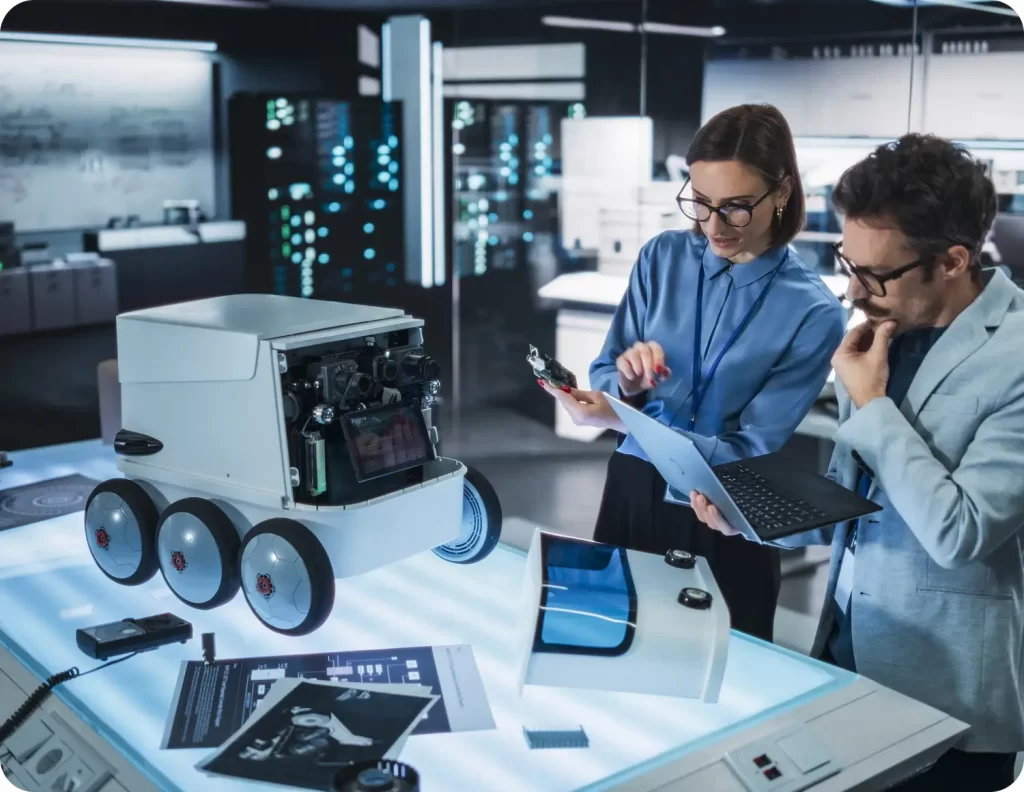

Robot controllers and drive electronics
Control units, motor-drive electronics and power supplies, with representative loads and switching activity.

Robots and industrial automation systems combine motor drives, switching power supplies, sensors, control electronics and communications. Stancer Testing-Lab provides robotics EMC testing and RF testing support to evaluate emissions and immunity in configurations that represent your intended application.
Our ISO/IEC 17025-accredited EMC and RF laboratory works with your engineers to plan operating modes, cable layouts, supporting equipment and functional monitoring. Testing can investigate development concerns or produce documented results for the agreed compliance program.
Start with EMC testing planning. Connected products may also require RF and wireless testing. Applicable standards, editions, product classifications and accredited methods are confirmed before testing.
Request a quoteWe consider the complete operating configuration, including drives, loads, controllers, cables and communication interfaces. Product size, power requirements and monitoring arrangements are reviewed before booking.
Control units, motor-drive electronics and power supplies, with representative loads and switching activity.
Automation modules, control panels and interfaces, evaluated with the supporting equipment needed to exercise their functions.
Electronic sensing, communication and peripheral assemblies, with signal integrity and observed responses included in the monitoring plan.
Battery-powered and radio-enabled equipment, with test feasibility and the finished-product EMC and wireless requirements reviewed together.
There is no single EMC standard for every robot. The applicable requirements depend on the equipment’s functions, environment and target markets.
| Reference | Role in the test plan |
|---|---|
| IEC/EN 61000-6-2 and 61000-6-4 | Generic industrial immunity and emissions references when no applicable dedicated product or product-family standard exists. |
| IEC/EN 61326-1 | Emissions and immunity requirements for equipment within its measurement, control and laboratory-use scope. |
| CISPR 11 | RF disturbance limits and measurement methods for equipment within its scope. Applicability, group and class are reviewed for the product. |
| FCC Part 15B and ICES-003 | Requirements to review for applicable digital equipment and unintentional radiators intended for the U.S. or Canadian market. |
| FCC Part 18 and ICES-001 | Applicable ISM equipment requires a separate classification review. Industrial use alone does not establish that these requirements apply. |
| Applicable radio requirements | Intentional transmitters may introduce additional FCC, ISED or ETSI requirements, including review of module integration and antennas. |
References in this guide do not imply accreditation for every listed method. Confirm the proposed methods and editions against our accreditation information. EMC results form part of the product evidence; machinery safety and other applicable obligations require their own assessment.
For market planning, see FCC testing, ISED testing and CE marking support. Provide the EMC and RF Client Information Sheet with dimensions, power ratings and the proposed operating setup.
The robot’s functions, intended environment and markets determine the applicable requirements. A dedicated product or product-family standard takes priority where applicable. Generic industrial standards can be used where no relevant dedicated standard exists. The controller, drives, radio modules and complete system should be considered when planning.
No. Industrial use alone does not place a robot under FCC Part 18. The equipment’s RF functions and regulatory classification need review. Applicable digital equipment may be subject to FCC Part 15B, while intentional transmitters can introduce separate radio requirements.
Bring the power supplies, drive loads, controllers, cables, peripherals and firmware needed for representative operation. Describe motion or load cycles and any monitoring tools. Agree a suitable setup and operating arrangements with the laboratory before shipping equipment.
Yes. An agreed immunity program can monitor resets, communication faults, sensor errors and other functional responses during the applied disturbances. EMC pre-compliance testing can help compare proposed corrections during development. Results relate to the documented setup and do not guarantee performance under every field condition.
Plan your testing
Tell us about your product and target markets. Our technical team will help clarify the testing scope and prepare a tailored quotation.