

VCCI Certification for Japan

What is VCCI
Certification?
VCCI certification is one of the most important electromagnetic compatibility (EMC) compliance frameworks for electronic products entering the Japanese market. It is administered by the Voluntary Control Council for Interference by Information Technology Equipment, a well-established organization responsible for controlling electromagnetic interference (EMI) from a wide range of electronic devices.
Although VCCI certification is officially classified as a voluntary program, its role in the Japanese market goes far beyond that definition. In practice, it is widely regarded as a de facto requirement by manufacturers, distributors, and end users.
For manufacturers, VCCI certification should not be viewed as a simple regulatory step. It represents a strategic component of market entry. A product bearing the VCCI mark signals that it has been evaluated according to recognized Japanese EMC standards and that it meets strict emission limits.
Why VCCI Certification Matters
for Manufacturers
Expanding into Japan offers significant opportunities, but it also comes with unique technical and commercial expectations. One of the most critical aspects is ensuring that electronic products do not generate excessive electromagnetic interference that could disrupt other devices. Without proper EMI compliance, manufacturers may encounter serious barriers, including product rejection, delays in distribution, or reputational concerns.
VCCI certification directly addresses these challenges. By verifying that a product meets defined emission limits, it ensures that the device can operate safely within its intended electromagnetic environment. This is particularly important in Japan, where high device density and advanced infrastructure make electromagnetic compatibility a key consideration.
From a practical standpoint, manufacturers who neglect VCCI compliance often face avoidable obstacles. Products may be questioned or rejected by importers and distributors who expect recognized compliance evidence. Engineering teams may need to revisit designs late in the development cycle, resulting in costly delays. In some cases, products that have already reached the market may require corrective actions if interference issues are identified.
Conversely, obtaining VCCI certification early in the process offers a clear advantage. It demonstrates that the product has been designed and tested with EMC performance in mind. It reduces the risk of unexpected compliance issues and provides confidence to all stakeholders involved in the commercialization process. Even though the program is voluntary, most experienced manufacturers treat it as an essential step when targeting Japan.

Products Subject to VCCI
VCCI certification applies to a broad range of electronic products that may generate electromagnetic disturbances. This includes equipment where electronic circuits, switching devices, or communication interfaces can produce emissions that affect surrounding systems.
Typical product categories include information technology equipment such as computers, servers, and networking devices, as well as multimedia equipment that combines computing and audiovisual functionalities. Audio and video systems, communication terminals, and various types of industrial electronic equipment also fall within the scope when they emit electromagnetic interference.
An important aspect of VCCI compliance is the classification of products into Class A or Class B categories. Class A equipment is generally intended for use in industrial or professional environments, where electromagnetic conditions are more controlled and less sensitive. Examples include servers, data processing systems, and industrial control units. Class B equipment, on the other hand, is designed for residential or consumer environments, where stricter emission limits apply due to the proximity of other sensitive devices.
Key VCCI Standards (EMI Compliance)

VCCI certification is based on a set of well-defined Japanese EMC standards that specify emission limits, measurement methods, and test configurations. These standards are closely aligned with international EMC frameworks, while incorporating specific requirements relevant to the Japanese market.
Among the most important standards is J55032 (H29), which applies to information technology and multimedia equipment. This standard has become the primary reference for a wide range of modern electronic products, covering both traditional IT devices and integrated multimedia systems.
For industrial, scientific, and medical equipment, J55011 defines the applicable emission requirements. This standard is particularly relevant for equipment operating in industrial environments, where higher power levels and different operating conditions must be considered. Household appliances are covered under J55014, which addresses emissions from devices used in domestic settings. Lighting equipment, including modern LED systems and control gear, falls under J55015 (H29), reflecting the growing importance of EMC compliance in lighting applications.
Each of these standards defines not only the allowable emission levels, but also the specific test setups and measurement procedures that must be followed. Selecting the correct standard is therefore a crucial step in the certification process. It ensures that testing is performed accurately and that the resulting data can be accepted for VCCI registration.
At Stancer Testing Lab, particular attention is given to this stage, as it directly impacts the efficiency and success of the overall compliance process.
Required Testing
(EMI Only)
Unlike some other regulatory frameworks, VCCI certification focuses exclusively on emissions. The objective is to ensure that the product does not generate electromagnetic disturbances that could interfere with other equipment.
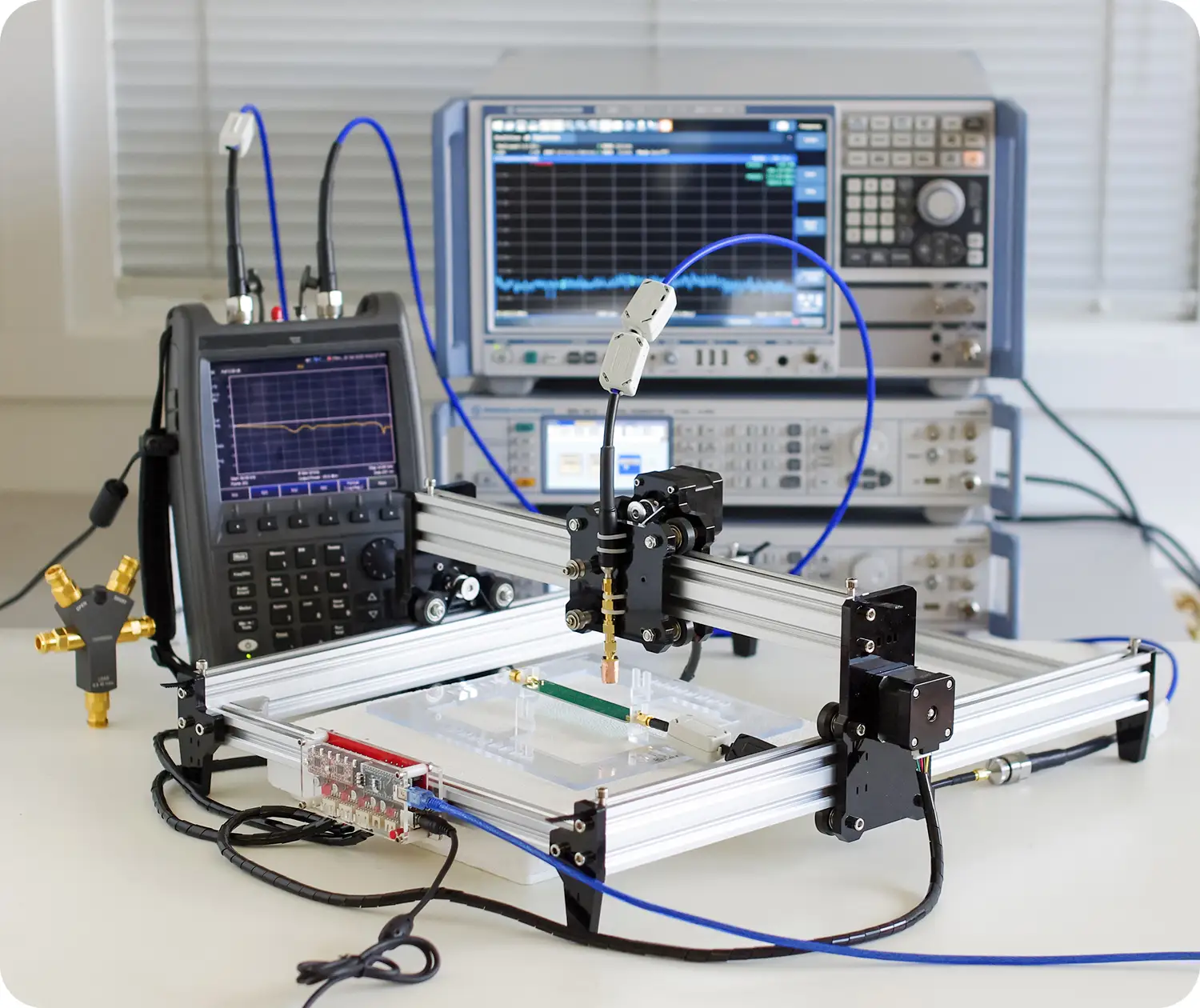
The testing process typically includes conducted emissions measurements, which evaluate disturbances transmitted through power lines, and radiated emissions measurements, which assess electromagnetic energy emitted into the surrounding environment. Together, these tests provide a comprehensive evaluation of the product’s electromagnetic behavior.
Accurate measurement of emissions is essential, especially for modern electronic devices that often operate with switching power supplies, high-speed digital circuits, and wireless interfaces. These technologies can generate complex emission patterns, requiring precise instrumentation and controlled test environments.
VCCI Mark and Product Registration
The VCCI mark is the visible outcome of the certification process. It indicates that the product complies with the applicable Japanese EMI requirements and has been properly registered within the VCCI system.
To apply the VCCI mark, manufacturers must first become members of the VCCI organization. Membership is a formal requirement and allows the manufacturer to submit test reports and register compliant products. Once testing has been completed in a recognized laboratory, the results are submitted and recorded. Only after this step can the product be labeled with the VCCI mark.
The marking requirements vary depending on whether the product falls under Class A or Class B. Class A equipment, due to its higher emission limits, typically requires an additional warning statement to inform users about potential interference in residential environments. Class B equipment, which meets stricter limits, can be marketed more freely for consumer use.
In all cases, the presence of the VCCI mark serves as a strong indication of product quality and compliance, reinforcing confidence among customers and partners.

Certification Process
The VCCI certification process follows a structured sequence designed to ensure that all technical and administrative requirements are properly addressed. It begins with a detailed technical review, during which the applicable standards and test scope are identified. This step is essential for defining the compliance strategy and avoiding unnecessary delays later in the process.
Following the initial review, a quotation and testing plan are established, outlining the required tests, timelines, and associated costs. The product then undergoes EMI testing in accordance with the selected standards. Once testing is completed, a formal test report is issued, documenting the results and confirming compliance.
The manufacturer must then proceed with VCCI membership registration, if not already completed. Finally, the product is registered within the VCCI system, and the appropriate marking can be applied.

Validity and Ongoing Compliance
One of the distinctive features of VCCI certification is that it does not have a fixed expiration date. Once a product is certified and registered, it remains compliant as long as its design and operating characteristics do not change.
However, this does not eliminate the need for ongoing vigilance. Any modification to the product, whether related to hardware, firmware, or configuration, may affect its electromagnetic behavior. In such cases, re-evaluation or additional testing may be required to ensure continued compliance.
Maintaining compliance over time is therefore an integral part of the certification strategy, particularly for manufacturers with evolving product lines.