

Radiated Emissions Testing (RE)
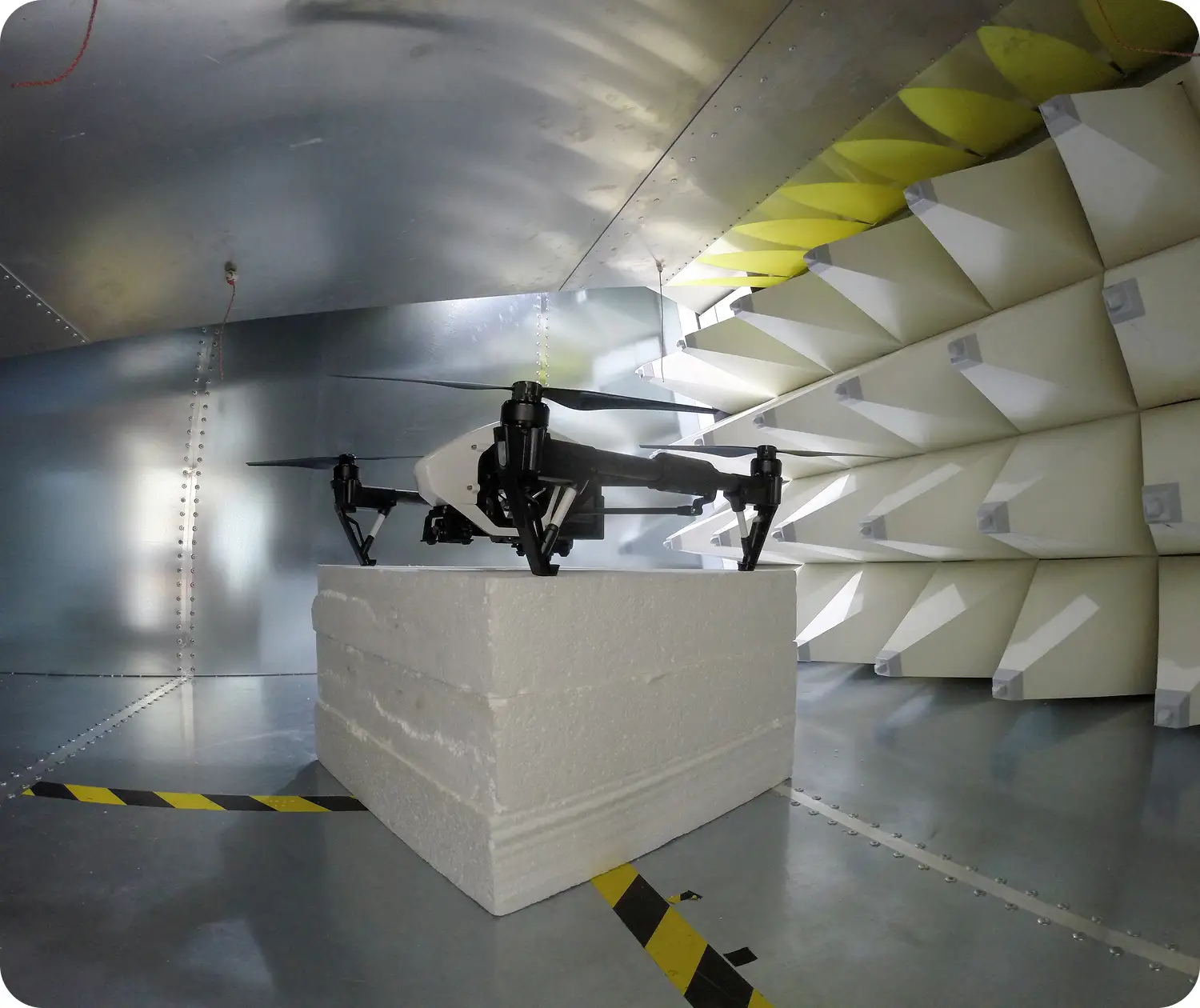
Radiated Emissions Testing
Radiated emissions testing measures unwanted electromagnetic energy emitted through space by electrical and electronic equipment. Stancer Testing-Lab helps manufacturers and product development teams evaluate radiated EMI against the limits for their product and target markets.
Our A2LA-accredited laboratory operates under ISO/IEC 17025:2017, certificate 7352.01. Measurements use agreed operating modes and representative supplies, cables and accessories, with the applicable methods and coverage confirmed against our accreditation scope. Testing can form part of a formal EMC program or an early pre-compliance investigation.
What Radiated EMI Testing Helps You Assess
Emission Levels and Margin
Compare measured emissions against the limits selected for the equipment class and target market.
Problem Frequencies and Configurations
Investigate peaks associated with clocks, converters, interfaces, enclosures and cables, using representative operating modes.
Design Changes and Evidence
Compare corrective changes and document the evaluated setup for the applicable product conformity program.
Radiated Measurements, Standards and Preparation
Rohde & Schwarz ESW44
EMI receiver measurements with ELEKTRA measurement automation and data processing support repeatable scans and documented results.Product-Specific Frequency Coverage
The required band and measurement chain are selected for the product. Higher-frequency RF capability is reviewed separately.Applicable Emissions Standards
The equipment category, target markets and applicable edition determine the limits and measurement method. The table is a selection guide; each program is reviewed against the accredited scope.| Reference | Typical application | What we confirm |
|---|---|---|
| CISPR 11 | Applicable industrial, scientific and medical equipment | Equipment group/class, frequency coverage, operating modes and limits. |
| CISPR 32 | Applicable multimedia equipment | Class A or B, measurement range and representative configurations. |
| FCC Part 15 / ICES-003 | Applicable electronic and digital products | Relevant regulatory provisions, equipment class and measurement procedures. |
| Automotive requirements | Applicable components or vehicles | The specified CISPR 25, CISPR 12 or UNECE R10 method and relevant test arrangement. |
Our Test Sequence
- Plan. Select the applicable limits, frequency range, test distance, modes and configurations.
- Configure. Arrange the sample, cables, supplies and accessories for the specified method.
- Scan. Use receiver measurements to identify significant emissions and candidate frequencies.
- Maximize. Vary the required antenna height, polarization and turntable azimuth; perform final measurements with the specified detectors and bandwidths.
- Report. Apply measurement corrections and document the configuration, results and assessment.
Prepare Your Product for Testing
Provide the product description, target markets, supply details, dimensions, ports, cable lengths and operating modes. Bring representative peripherals, loads and software that keeps relevant functions active. Complete the EMC & RF client information sheet. Existing reports and known emission peaks help us prepare a focused investigation. Send the specifications for a quotation defining the test configurations and reporting requirements.Laboratory Capabilities and Reporting
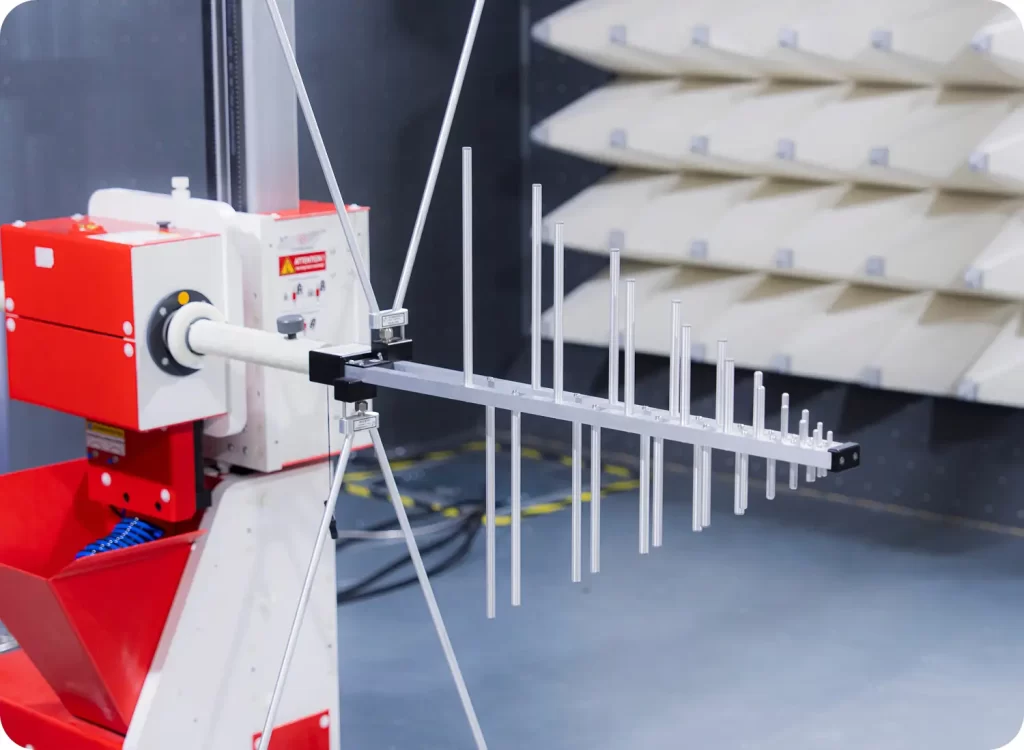
The ESW44 receiver, antenna tower, turntable and ELEKTRA system support emissions measurements in our laboratory. Peak scans identify candidate frequencies; final measurements use the detector and bandwidth required by the method, including Quasi-Peak or Average where applicable. Our wider RF measurement capability reaches up to 325 GHz using an appropriate measurement chain. This is distinct from the ESW44 receiver's direct range and does not mean every radiated emissions method requires or supports that full band. Frequency coverage and accredited conditions are confirmed for each program. Results can support applicable FCC, ISED or CE marking documentation. Complete approval or conformity routes are assessed separately from the laboratory measurement.Radiated Emissions Testing FAQs
How do radiated and conducted emissions differ?
Radiated emissions travel through space and are measured with the specified antenna and site arrangement. Conducted emissions are measured on relevant cables or ports. A product may require both.
Why vary antenna height, polarization and turntable position?
Those adjustments help locate the maximum emission when required by the method. The applicable standard defines the site arrangement and maximization procedure.
Does radiated emissions testing establish immunity performance?
No. Emissions testing evaluates energy leaving the equipment. Immunity testing evaluates its response to an applied disturbance. A complete EMC program may require both.
What affects testing time and cost?
Frequency coverage, operating modes, configurations, sample size, troubleshooting and report requirements define the work. Product readiness and representative accessories help avoid unnecessary setup delays.
Plan your testing
Let’s move your product toward market.
Tell us about your product, testing needs, and target markets. Our technical team will help define the scope and prepare a tailored quotation.