

Radiated Immunity Testing (RI)
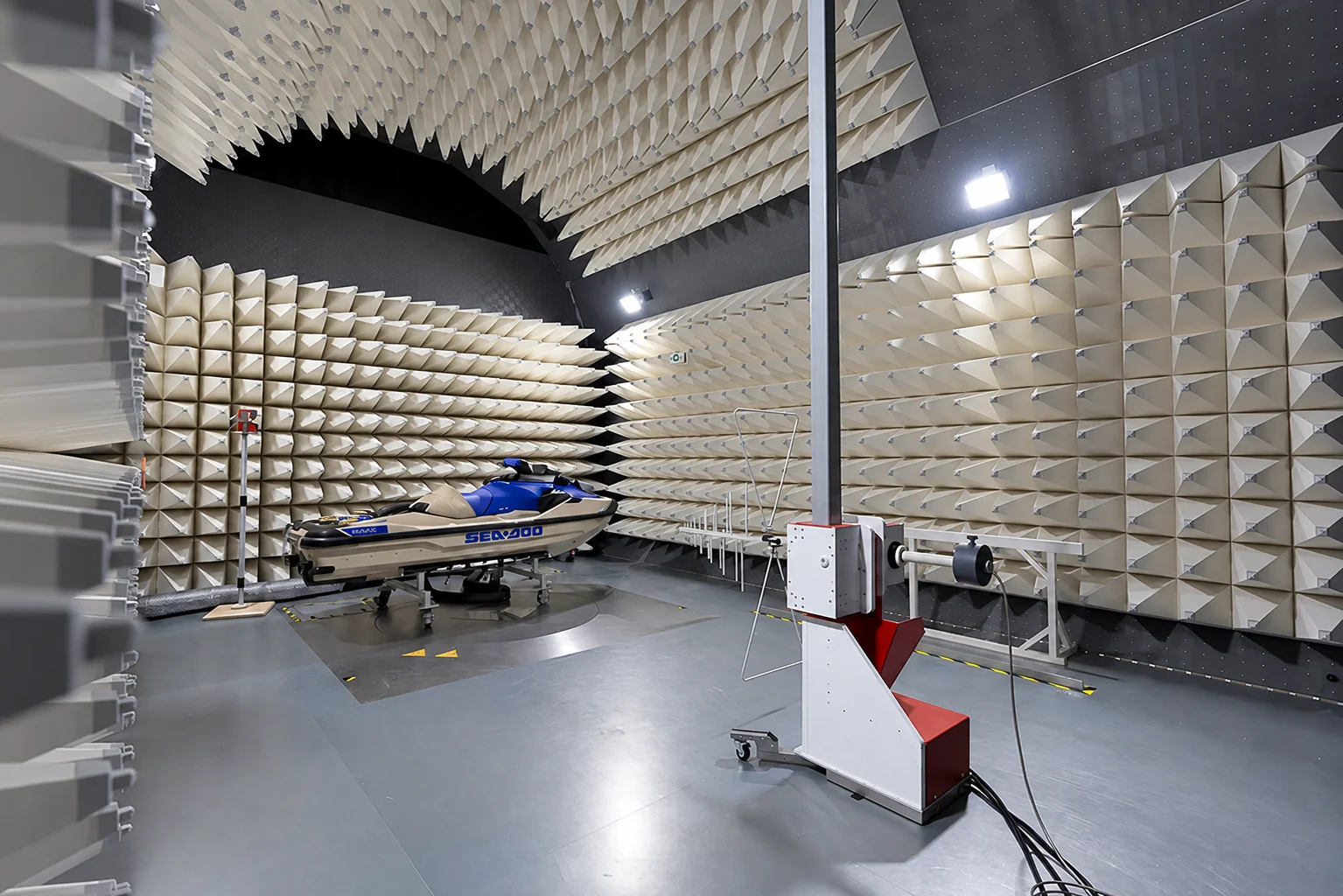
Radiated Immunity Testing
Radiated immunity testing evaluates how electrical and electronic equipment performs when exposed to controlled radio-frequency electromagnetic fields. Engineers monitor the product for resets, communication errors, incorrect readings and other changes in operation.
Stancer Testing-Lab supports manufacturers and product development teams with formal EMC testing and focused pre-compliance investigations. The exposure conditions and monitored functions are defined for the product and its intended application.
What RF Immunity Testing Helps You Assess
- Evaluate specified functions against agreed performance criteria.
- Identify susceptible frequencies, operating modes and interfaces.
- Investigate resets, data errors and sensor disturbances.
- Compare shielding, filtering and cable changes in a documented setup.
- Prepare test evidence for applicable product EMC requirements.
Results apply to the tested configuration and exposure conditions.
RF Immunity: From Test Plan to Results
Frequency Coverage
RF immunity infrastructure supports testing up to 6 GHz. The required frequency range and available setup are confirmed for each method.Field Strength
Routine programs can include levels up to 30 V/m. Higher-field testing up to 200 V/m requires confirmation of the band, modulation, test area and configuration.Performance Monitoring
Product functions are monitored against agreed acceptance criteria. Observed disturbances and recovery behaviour are recorded.How the Test Progresses
- PlanDefine exposure and acceptance criteria.
- CalibrateEstablish the required field conditions.
- ExposeApply the specified RF test sequence.
- MonitorObserve the agreed product functions.
- ReportDocument conditions and results.
Controlled Exposure and Monitoring
Our chamber setup combines RF signal generation, high-power amplifiers, suitable antennas and field measurement equipment. Antenna position, polarization, equipment orientation and cable arrangement follow the selected method. We establish the required field conditions before testing. For IEC 61000-4-3, this includes assessment of field uniformity over the required test area. Automotive methods have their own setup and calibration requirements. The test plan defines frequency range, field strength, modulation, frequency steps and dwell time. During exposure, we monitor the agreed functions and record observed disturbances with their frequency, test conditions and recovery behaviour.
Applicable Standards
IEC 61000-4-3 defines a radiated RF electromagnetic field immunity method. The applicable product or generic standard determines the required exposure and performance criteria. IEC 60601-1-2 includes radiated RF immunity requirements for medical electrical equipment, with attention to basic safety and essential performance. Explore our medical device EMC testing service. ISO 11452-2 addresses automotive component testing in an absorber-lined shielded enclosure. ISO 11451-2 addresses vehicle testing using an off-vehicle radiation source. See our automotive EMC testing service. The applicable edition, clauses and accredited coverage are confirmed against our scope of accreditation and the agreed test plan. For multimedia equipment, radiated RF immunity may form part of a CISPR 35 / EN 55035 test programme, with performance criteria defined for the product’s functions.Prepare Your Product
Provide the requested standard or customer specification, target markets, dimensions, electrical ratings, operating modes, cables and representative loads. Define the functions to monitor, acceptable behaviour during exposure and permitted recovery actions. Bring the accessories, firmware and equipment needed to operate and monitor the product. Complete our EMC & RF Client Information Sheet and upload it through the contact form. Review our laboratory capabilities for further facility information.Radiated Immunity Testing FAQs
How does immunity differ from emissions testing?
Immunity testing evaluates the product's response to an applied disturbance. Emissions testing measures electromagnetic energy emitted by the product. They address different EMC requirements.
Does every product need the same field strength?
No. The product standard, intended environment or customer specification determines the required exposure. The laboratory's maximum capability is not automatically the required test level.
How is a pass or failure determined?
The test plan defines monitored functions and performance criteria, including any permitted temporary degradation or recovery. Medical equipment also requires consideration of basic safety and essential performance.
Can you investigate an immunity failure?
Yes. A focused investigation can examine affected frequencies, operating modes and cable arrangements, then compare proposed design changes. Findings guide corrective work but do not guarantee a later compliance pass.
Plan your testing
Let’s move your product toward market.
Tell us about your product, testing needs, and target markets. Our technical team will help define the scope and prepare a tailored quotation.