

ESD (Electrostatic Discharge) Testing
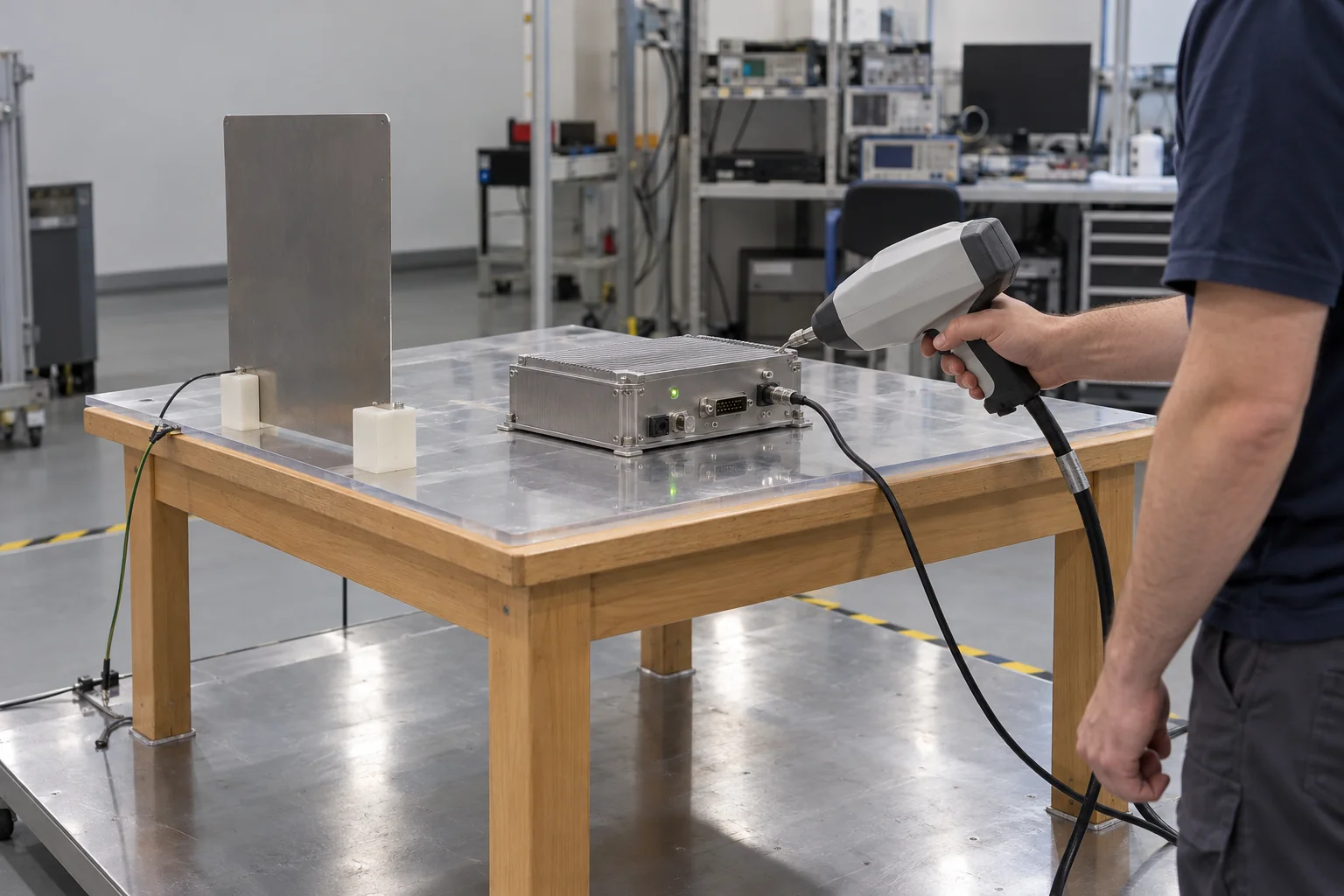
Electrostatic Discharge (ESD) Testing
ESD testing evaluates how electrical and electronic equipment responds to electrostatic discharges applied to accessible points or nearby coupling planes. Engineers monitor the product for resets, data errors, incorrect outputs and other changes in operation.
Stancer Testing-Lab supports manufacturers and product development teams with EMC testing and pre-compliance investigations. We define the discharge points, operating modes and acceptance criteria for the applicable product requirements.
What ESD Immunity Testing Helps You Assess
- Evaluate specified functions during and after electrostatic discharge.
- Identify susceptible touch points, interfaces and enclosure features.
- Investigate resets, communication errors and changes in output.
- Compare grounding, shielding and protection changes.
- Prepare evidence for the applicable product EMC requirements.
Results apply to the tested configuration and discharge conditions. A successful equipment-level test does not establish the ESD rating of every internal component.
ESD Testing: From Discharge Points to Results
Discharge Methods
Contact, air and indirect discharge are selected for the applicable locations and test method.Test Levels
ESD equipment capability includes levels up to 16 kV. Contact and air discharge limits and accredited coverage are confirmed separately for the requested setup.Performance Monitoring
Specified functions are assessed against agreed acceptance criteria, with disturbances and recovery documented.How the Test Progresses
- PlanDefine locations and acceptance criteria.
- VerifyCheck the generator and test setup.
- DischargeApply the specified discharge sequence.
- MonitorObserve the agreed product functions.
- ReportDocument conditions and results.
Discharge Application and Monitoring
We prepare the equipment, ground reference plane and applicable coupling planes according to the selected method. Accessible locations and operating modes are reviewed before testing so the discharge plan reflects the product's use. Contact discharge is applied where specified to suitable conductive surfaces. Air discharge is used at applicable locations, while indirect discharges to coupling planes assess the response to nearby events. Positive and negative polarities and the required number and spacing of discharges follow the agreed test plan. During testing, we monitor the specified functions and document observed disturbances, their discharge conditions and recovery behaviour. Results are evaluated against the applicable performance criteria.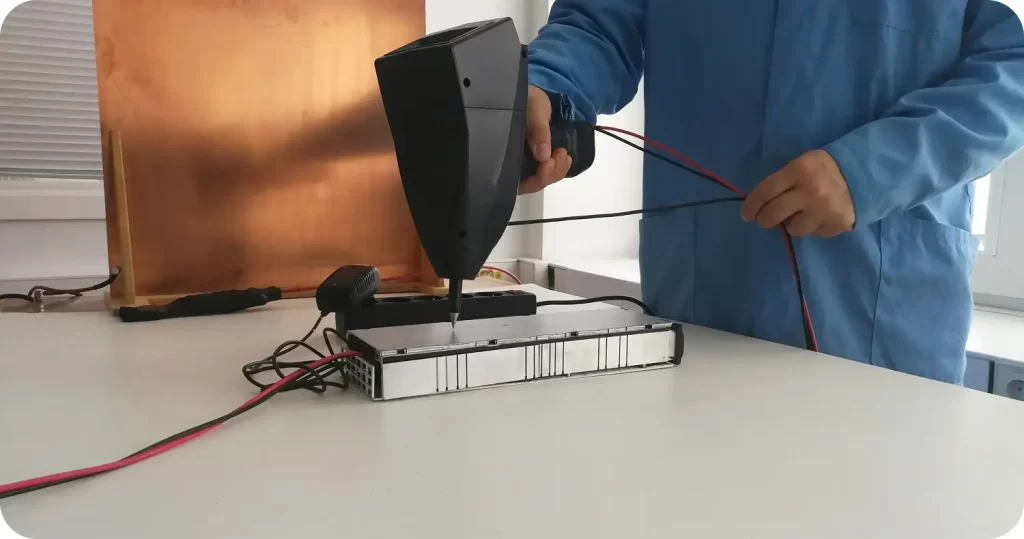
Applicable Standards
IEC 61000-4-2 defines an equipment-level electrostatic discharge immunity method. The applicable product or generic standard determines the required levels, locations and performance criteria. The supported edition and clauses are confirmed against our scope of accreditation. For medical electrical equipment, ESD immunity forms part of the applicable IEC 60601-1-2 program, with attention to basic safety and essential performance. Explore our medical device EMC testing service. Automotive specifications can require different discharge networks, setups and procedures. Share the requested specification with our automotive EMC testing team so the method and covered requirements can be confirmed. For multimedia equipment, CISPR 35 / EN 55035 specifies the applicable ESD requirements and performance criteria.Prepare Your Product
Provide the applicable standard or customer specification, operating modes, power supplies, accessories and cables. Identify user-accessible surfaces and interfaces and describe the functions that must be monitored. Define acceptable behaviour during exposure and permitted recovery actions. Bring the firmware, loads and monitoring equipment needed to operate the product. Complete our EMC & RF Client Information Sheet and upload it through the contact form.ESD Testing FAQs
What is the difference between contact and air discharge?
Why are discharges applied to coupling planes?
Is IEC 61000-4-2 the same as component HBM testing?
Can you investigate an ESD failure?
Plan your testing
Let’s move your product toward market.
Tell us about your product, testing needs, and target markets. Our technical team will help define the scope and prepare a tailored quotation.