
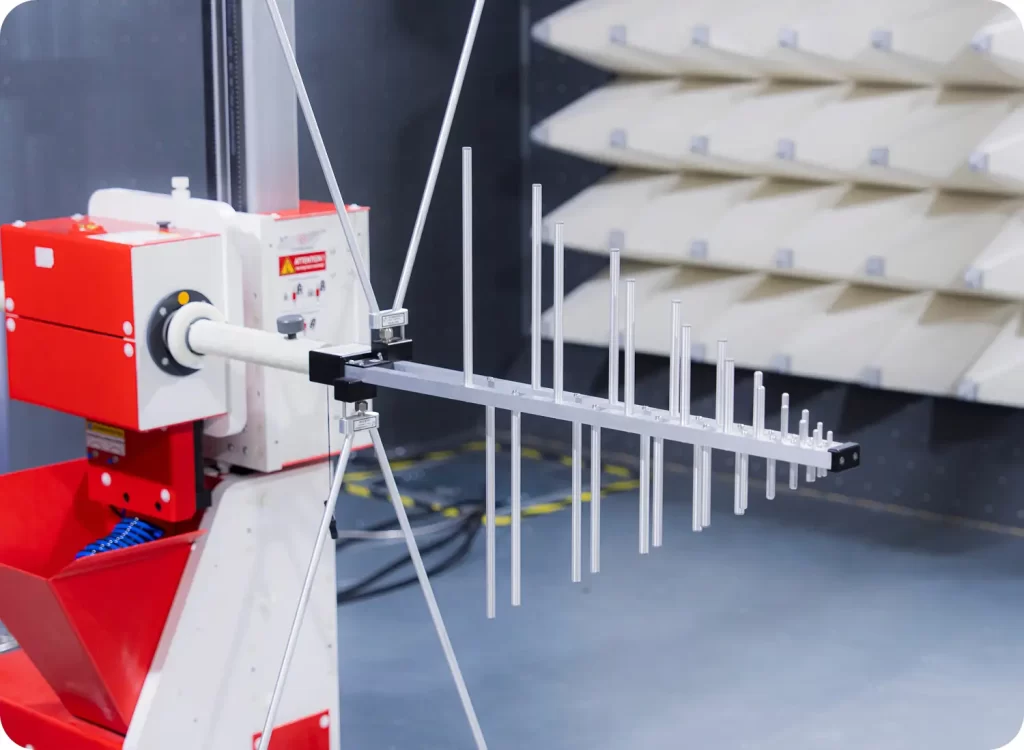
NSA and sVSWR Measurement
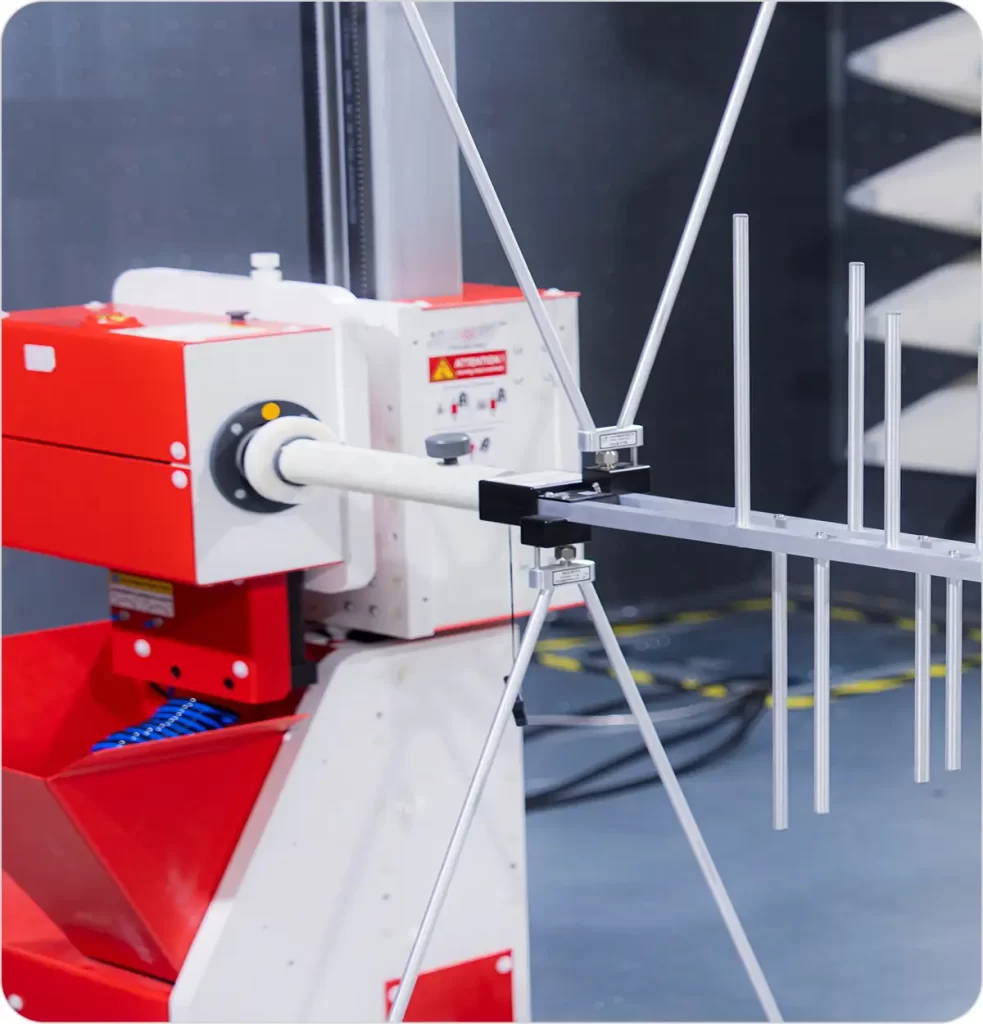
EMC Test Site Validation: NSA and sVSWR Measurements
EMC test site validation evaluates whether a measurement site meets the conditions required for radiated emissions testing. Stancer Testing-Lab provides normalized site attenuation (NSA) and site voltage standing wave ratio (sVSWR) measurement services for laboratories, manufacturers and test facilities. We review the site type, frequency range, measurement distance and test volume to select the appropriate method. Open area test sites (OATS), semi-anechoic chambers (SACs) and fully anechoic rooms require arrangements specific to their intended use. A validation applies to the documented configuration and conditions.Discuss Your Site ValidationChoose the Right Site Validation Method
NSA and sVSWR address different frequency ranges and site characteristics. Neither replaces every other chamber qualification test.
sVSWR: 1–18 GHz
Site voltage standing wave ratio evaluates the influence of unwanted reflections within a specified test volume. The antenna positions, polarization and site arrangement follow the applicable procedure.Distance and Test Volume
Validation is tied to the documented measurement distance and volume. Share the intended EUT size and measurement arrangement so the assessment represents how the site will be used.
Validate the Arrangement You Use
A site validation describes a specific geometry and frequency range. Review the distance, volume and site configuration before relying on the result for product measurements.
A Measurement Plan Specific to Your Facility
Provide chamber drawings, measurement distances, intended frequency coverage and test-volume dimensions. Identify the ground plane, absorber arrangement, turntable, measurement table and antenna positioning systems relevant to the assessment.
For fully anechoic facilities or alternative site geometries, the relevant validation procedure must be selected explicitly. An NSA result for a ground-plane site does not automatically qualify every anechoic measurement arrangement.

Methods, Standards and Validation Workflow
| Reference | Application | What to confirm |
|---|---|---|
| CISPR 16-1-4 | Antennas and test sites for radiated disturbance measurements | Required edition, site type, method, frequency coverage and test volume. |
| ANSI C63.25.2-2024 | Radiated emission site validation, 30 MHz to 1 GHz | Applicable NSA, delta NSA or site comparison procedure, reference data and arrangement. |
| ANSI C63.25.1-2018 | Radiated emission site validation, 1 GHz to 18 GHz | Required sVSWR or permitted alternative procedure, geometry and equipment availability. |
- DefineAgree the standard, edition, frequency range, distance and volume.
- ConfigureDocument antennas, positions, polarization and the site arrangement.
- MeasurePerform the agreed site measurements and assess deviations.
- DocumentRecord results, configuration, assessment and any limitations.
Prepare Your Site for Validation
- Send the facility drawings, intended measurement distance, test volume and frequency range.
- Identify the requested standard, edition, report requirements and previous validation results.
- Describe recent changes to absorbers, ground plane, tables, antennas or the chamber arrangement.
- Confirm access, positioning systems and the configuration available during measurement.
What Makes a Site Validation Useful
Clear geometry, traceable measurement inputs and documented assessment make results useful for the laboratory’s intended measurements.

Defined Geometry
Document the antenna separation, heights, polarization and measurement volume required by the chosen method.

Traceable Measurement Inputs
Review antenna factors, cable losses and relevant instrument calibration information for the measurement arrangement.

Configuration-Specific Results
Record the site arrangement and conditions so later changes can be assessed against the original validation.

Practical Findings
Use measured deviations to guide investigation of reflections, absorber placement, ground-plane continuity or positioning, as relevant to the method.
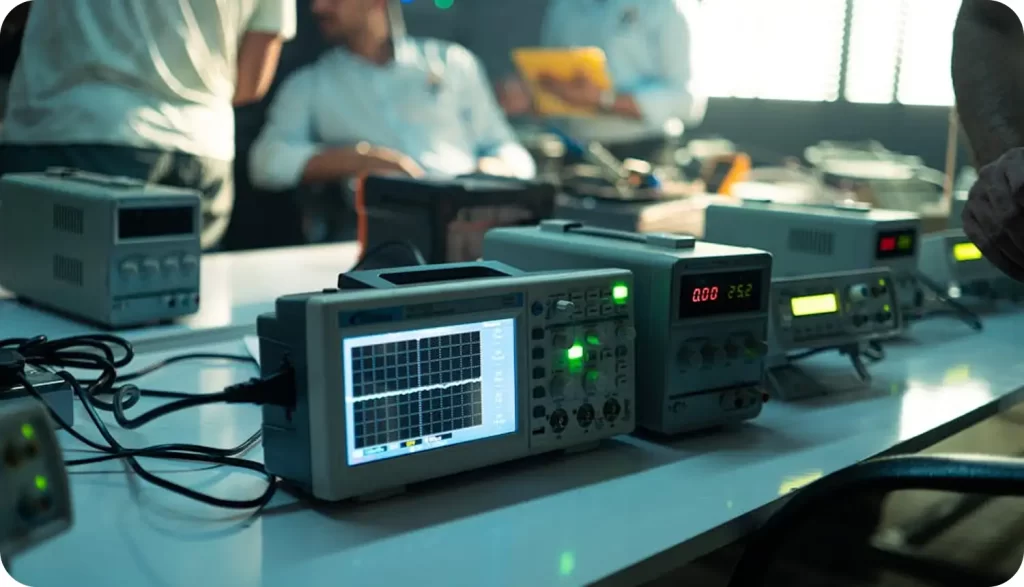
Documented Measurements and Assessment
Agree the report content before testing: measured results, reference or acceptance criteria, site geometry, frequency coverage and relevant measurement uncertainty information. Calibration intervals follow the laboratory’s equipment controls; an annual interval is not assumed for every instrument. Stancer’s ISO/IEC 17025 accreditation applies to its listed scope. Review our accreditation information and confirm whether the requested site-validation method and conditions are included.
Plan Your Next Site Validation
Whether you are commissioning a facility, reviewing a modified chamber or planning revalidation, begin with the intended measurement arrangement and applicable requirements. Send the site details and previous results so our team can review the assessment you need. Contact Stancer Testing-Lab to discuss NSA measurements, sVSWR measurements and EMC test site validation.EMC Site Validation FAQs
What is normalized site attenuation (NSA)?
NSA is a site-validation measurement that normalizes measured attenuation using antenna factors and compares it with the applicable reference. It is commonly used for radiated emission sites from 30 MHz to 1 GHz, under the required procedure.What does sVSWR measure?
Site voltage standing wave ratio evaluates the effects of unwanted reflections within the specified radiated-emissions test volume. It is a site-validation quantity, distinct from an antenna’s input VSWR.Is sVSWR the same as immunity field uniformity?
No. sVSWR evaluates a radiated-emissions site. Field uniformity for radiated immunity testing is assessed under a different procedure, such as the applicable IEC 61000-4-3 arrangement.When should a site be revalidated?
Follow the applicable regulatory, accreditation and laboratory requirements. Changes to the site or measurement arrangement can also require assessment or revalidation; discuss changes to absorbers, ground plane, tables or test volume before relying on previous results.Plan your testing
Let’s move your product toward market.
Tell us about your product, testing needs, and target markets. Our technical team will help define the scope and prepare a tailored quotation.