
Vehicle Electromagnetic Compatibility (EMC) Regulatory Compliance and Practical Implementation
In an era defined by electrification, connectivity, and advanced electronic control systems, ensuring electromagnetic compatibility in vehicles is no longer optional. It is fundamental to safety, regulatory approval, and reliable vehicle operation. Modern vehicles contain dozens of electronic subsystems, including advanced driver assistance systems, infotainment platforms, electric powertrains, battery management systems, radar modules, and vehicle to everything communication technologies.
These systems operate across tightly controlled frequency ranges and share complex wiring networks. Without proper electromagnetic control, interference can degrade performance or disrupt critical safety functions. This is why structured EMC testing and validation are mandatory in automotive programs.
What Is Automotive EMC and Why It Matters
Electromagnetic compatibility refers to a system’s ability to operate correctly in its electromagnetic environment without generating excessive emissions and without suffering functional degradation when exposed to external disturbances.
In automotive applications, EMC is critical because electronic systems directly influence braking, steering, stability control, and powertrain management. Electrical noise generated by inverters, DC DC converters, charging systems, and high voltage switching devices can couple into sensitive circuits. Wireless subsystems such as Bluetooth, WiFi, LTE, 5G, GPS, and automotive radar must coexist without spectral conflict.
An EMC failure can lead to malfunction, degraded performance, or regulatory non compliance. Because of this, automotive EMC requirements are governed by internationally recognized regulations.
Planning vehicle or component qualification? Explore Stancer’s automotive EMC testing services for whole-vehicle and electrical/electronic sub-assembly evaluation, accredited test methods and test-program preparation.
Regulatory Framework for Automotive EMC
The most widely recognized regulatory framework for vehicle EMC compliance is UNECE Regulation No. 10, commonly referred to as R10. This regulation defines electromagnetic emission and immunity requirements for complete vehicles and electrical electronic sub assemblies.
R10 is adopted across European Union member states and recognized in multiple international markets through type approval agreements. It establishes emission limits, immunity performance criteria, documentation requirements, and approval marking rules.
Because R10 addresses both emissions and immunity, it provides a comprehensive compliance structure aligned with global automotive standards.
Core Requirements: Emissions Control
Emissions refer to unwanted electromagnetic energy generated by vehicle electronics. These emissions may be radiated through space or conducted along wiring harnesses and power lines.
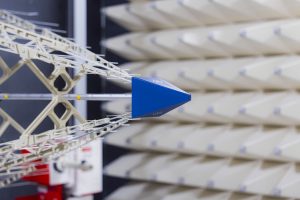
Radiated emissions are measured inside controlled environments such as semi anechoic chambers using calibrated antennas. Conducted emissions are evaluated using line impedance stabilization networks and precision receivers. Proper radiated emission testing and conducted emission testing ensure compliance with specified frequency limits.
Emission limits are defined across frequency bands to protect radio communication systems, other vehicles, and external infrastructure.
Core Requirements: Immunity Performance
Immunity testing verifies that vehicles and subsystems maintain functional integrity when exposed to electromagnetic disturbances. Disturbance profiles simulate real world electromagnetic conditions.
Typical immunity evaluations include exposure to radiated RF fields, conducted RF disturbances, electrical fast transients, surge events, and electrostatic discharge. Structured radiated immunity testing and ESD testing confirm resilience against these stress conditions.
Exposure levels are selected to represent electromagnetic environments encountered near mobile transmitters, charging stations, industrial facilities, and roadside communication infrastructure.
Standards Referenced in Automotive EMC
UNECE R10 references internationally recognized measurement standards. Commonly applied standards include:
- CISPR 12 and CISPR 25 for vehicle and component emissions
- ISO 11451 and ISO 11452 for radiated and conducted immunity
- IEC 61000 4 series for standardized immunity methods
These standards define measurement bandwidths, detector types, antenna configurations, test levels, and pass fail criteria necessary for defensible regulatory validation.
Type Approval and Documentation
To obtain type approval, manufacturers submit technical documentation including detailed test reports, product descriptions, wiring configurations, and declarations of conformity. Testing should be performed in controlled facilities with calibrated instrumentation and traceable measurement systems.
Accredited laboratories operating under ISO IEC 17025 ensure measurement reliability and regulatory acceptance. Upon successful evaluation, an approval mark is issued, typically consisting of an E mark followed by a country code and regulation identifier.
Practical Engineering Considerations
Successful automotive EMC compliance begins early in the design cycle. Engineering best practices include optimized PCB layout, controlled grounding strategies, harness routing discipline, shielding design, and filtering network integration.
Pre compliance evaluation during development allows early detection of emission hotspots and immunity weaknesses. Addressing EMC issues at the prototype stage significantly reduces redesign risk and validation delays.
System Level Integration Challenges
Components that pass laboratory testing individually may behave differently when integrated into a full vehicle architecture. Harness length, structural bonding, chassis grounding, and subsystem interaction influence overall EMC performance.
Full vehicle validation captures these interactions and ensures compliance under realistic operating configurations.
Benefits of Robust Automotive EMC Compliance
A structured automotive EMC strategy delivers measurable advantages:
- Regulatory approval and uninterrupted market access
- Improved safety and system reliability
- Reduced field failures and warranty exposure
- Engineering optimization through standardized validation feedback
Conclusion
Automotive electromagnetic compatibility compliance under frameworks such as UNECE Regulation No. 10 is a defining requirement for modern vehicle development. By systematically managing emissions and immunity performance through standardized measurement methods, disciplined engineering practices, and structured documentation, manufacturers ensure safety, regulatory acceptance, and long term reliability.
As vehicle electrification and connectivity expand, EMC excellence becomes not just a regulatory obligation but a competitive advantage in the global automotive market.
Frequently Asked Questions
What is the difference between vehicle-level EMC testing and ESA (component-level) EMC testing?
- Vehicle-level EMC testing evaluates a complete, fully operational vehicle with all electronic systems installed, measuring electromagnetic emissions and immunity in the final integrated configuration.
- ESA (Electrical/Electronic Sub-Assembly) EMC testing evaluates individual electronic components on a laboratory test bench before they are integrated into the vehicle.
- Both testing scopes are essential because wiring harnesses, grounding strategies, antenna placement, and interactions between multiple electronic systems can create electromagnetic behaviors that only appear once the complete vehicle is assembled.
What automotive EMC standards are required for UNECE Regulation No. 10 (ECE R10) type approval?
- Complete vehicles are generally evaluated using CISPR 12 for radiated emissions together with immunity methods from the ISO 11451 series.
- Electrical/Electronic Sub-Assemblies (ESAs) seeking separate approval are typically tested according to CISPR 25 for emissions and ISO 11452 for immunity.
- The applicable test levels, operating conditions, and frequency ranges depend on the vehicle category and the function of the component within the vehicle.
What is the difference between CISPR 12 and CISPR 25 in automotive EMC testing?
- CISPR 12 measures radiated emissions from complete vehicles to protect external radio services and nearby vehicles from electromagnetic interference.
- CISPR 25 evaluates conducted and radiated emissions from electronic components and subassemblies to protect the vehicle’s own onboard receivers, including AM/FM radio, GPS, cellular, Bluetooth®, and Wi-Fi® systems.
- Simply put, CISPR 12 focuses on what the vehicle radiates externally, while CISPR 25 focuses on emissions generated by components inside the vehicle.
How does ISO 11451 differ from ISO 11452 for automotive immunity testing?
- ISO 11451 specifies radiated immunity testing for complete vehicles in realistic operating configurations.
- ISO 11452 defines immunity test methods for individual electronic modules and subassemblies evaluated independently on a laboratory test bench.
- Both standards evaluate immunity using techniques such as radiated RF fields, Bulk Current Injection (BCI), and Electrostatic Discharge (ESD), but the equipment under test and the test configurations are fundamentally different.
What does ISO 10605 cover in automotive ESD testing, and why is it important?
- ISO 10605 defines electrostatic discharge (ESD) test methods specifically developed for automotive electronics.
- It establishes discharge networks, voltage levels, and procedures that simulate realistic ESD events encountered during manufacturing, servicing, and normal vehicle operation.
- Compliance demonstrates that electronic modules can withstand these events without permanent damage, unacceptable performance degradation, or unintended functional disturbances.
Why is vehicle-level EMC testing still required after component-level ESA testing?
- Passing component-level EMC testing does not guarantee that the complete vehicle will comply with automotive EMC requirements.
- Once electronic modules are integrated into a vehicle, new electromagnetic coupling paths can develop through wiring harnesses, grounding, cable routing, antennas, and interactions between multiple electronic systems.
- OEMs and regulatory authorities therefore require both component-level and vehicle-level testing to verify real-world electromagnetic compatibility.
What is ISO 16750-2 and how does it relate to automotive EMC testing?
- ISO 16750-2 specifies electrical environmental tests for automotive electronic equipment, including supply voltage variations, voltage dips, AC ripple, transient disturbances, engine starting profiles, and load dump events.
- Although it is not strictly an EMC standard, it complements EMC validation by ensuring electronic systems can tolerate the harsh electrical conditions present on vehicle power networks.
- Most OEM qualification programs require ISO 16750-2 testing alongside traditional automotive EMC testing to demonstrate overall electrical robustness.