

EMC Pre-Compliance Testing
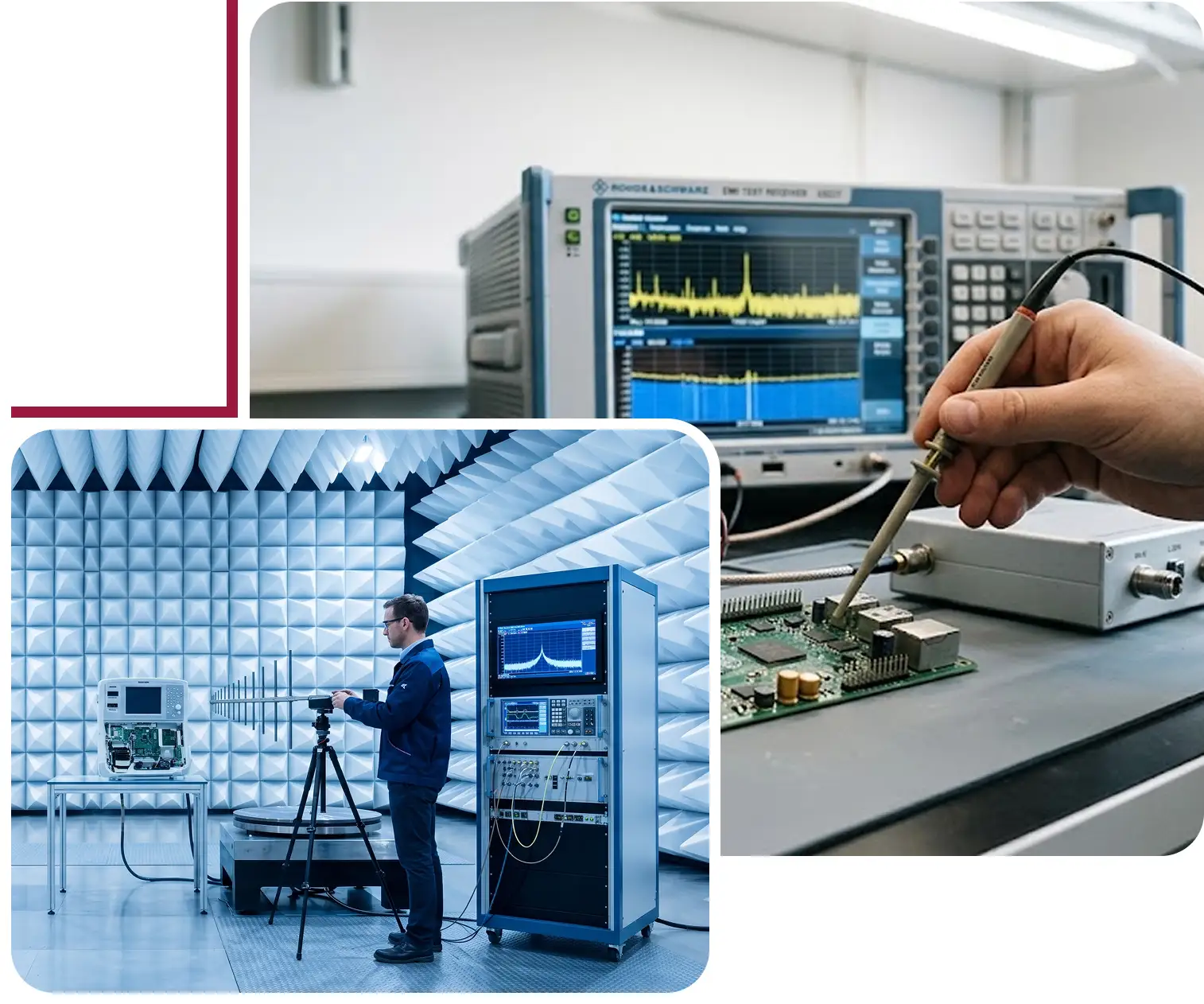
EMC Pre-Compliance Testing
Find EMC Problems Before Formal Compliance Testing
Stancer Testing-Lab provides pre-compliance EMC testing for manufacturers developing electronic and wireless products in Canada and the United States. We help investigate emissions, immunity responses and design changes before the formal EMC testing program.
Whether you are developing an industrial controller, a medical device, an IoT product or an automotive electronic component, the evaluation should reflect its power supplies, cables, accessories and operating modes. Applicable EMC and radio requirements depend on the product and target markets. Pre-compliance testing helps identify risks and compare corrective changes while the design can still be modified.
This is where EMC pre-compliance testing becomes essential
Our engineers work with your design team to investigate the sources and coupling paths behind an EMC problem. A session can focus on an emissions peak, a reset during immunity testing, cable-related noise or the effect of a proposed filter or shielding change.
We document the configuration and compare measurements before and after the change. These findings help prioritize the next design step and prepare the product for formal testing. The extent of improvement depends on the design and the investigation; pre-compliance results do not guarantee a later compliance pass.
EMC pre-compliance testing is an engineering evaluation of electromagnetic emissions or immunity before a formal compliance program. The agreed measurements help identify design risks and guide corrective work.
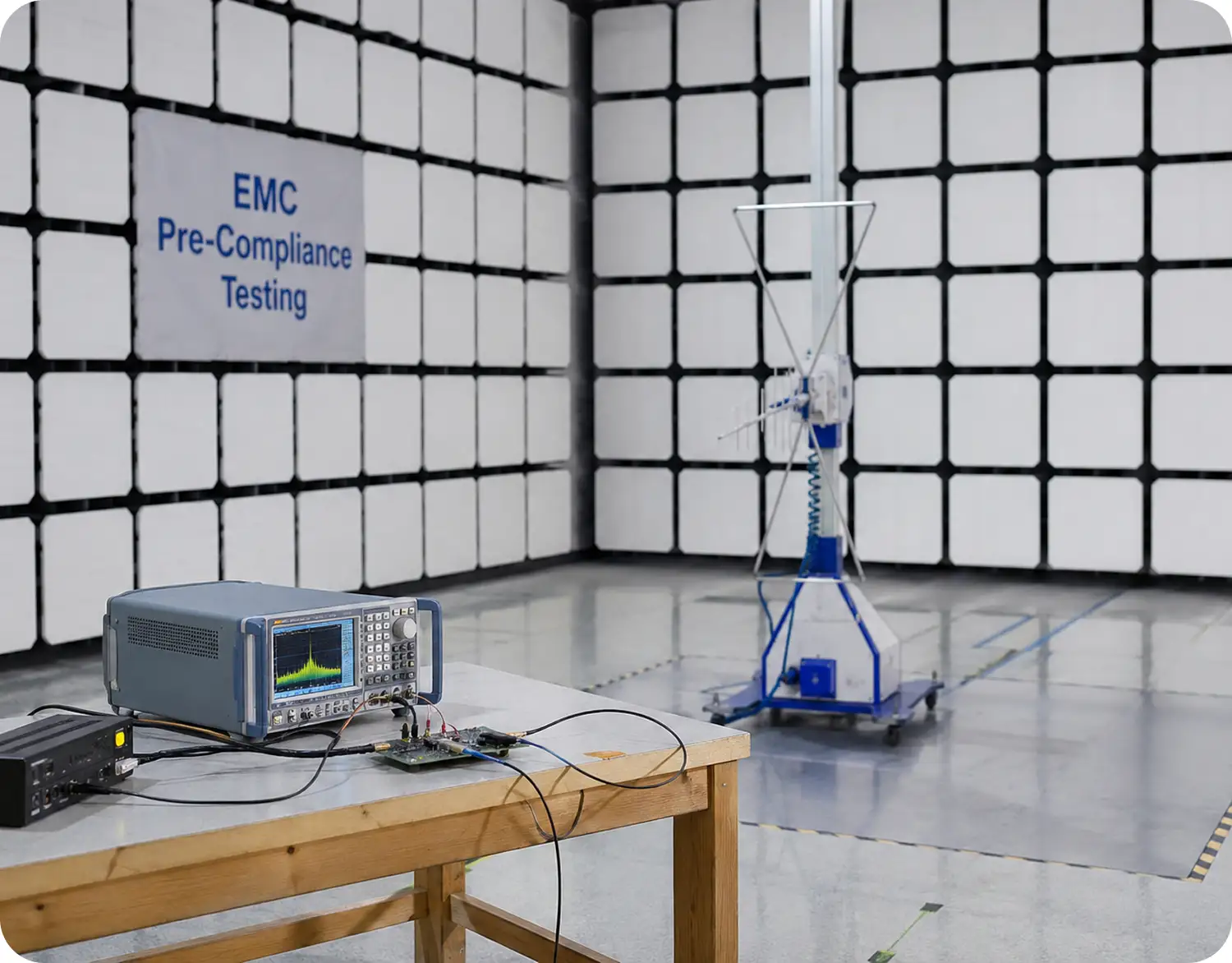
What Is EMC Pre-Compliance Testing?
An EMC pre-scan can identify prominent emission frequencies and compare measured levels with the limits selected for the product. Targeted immunity investigations can examine how the device responds to an agreed disturbance while its relevant functions are monitored. The plan should state the methods, configurations and any departures from formal test procedures.
Pre-compliance can cover a focused design question or a broader evaluation of the assembled product. We help investigate filtering, grounding, shielding and cable arrangements, then repeat the relevant measurements to assess the change.
Does pre-compliance replace formal EMC testing?
No. It provides engineering feedback for the evaluated configuration. The formal program must satisfy the applicable methods, conditions and reporting requirements. A pre-scan or troubleshooting result alone does not establish product authorization.
When should we book EMC pre-compliance testing?
Book when the prototype can operate in representative modes with its intended power supplies, cables and accessories, while changes to the design are still practical. Earlier component or board investigations can also address a specific concern. Share your development stage so we can agree a useful evaluation.
Why EMC Pre-Compliance Matters
1. Identify Compliance Risks Earlier
A focused evaluation can reveal emissions peaks or immunity responses before the final product configuration is fixed. Findings help prioritize changes to layout, shielding, filters, cables or firmware and identify what should be checked in the formal program.
2. Plan Development Work Around Measurements
Repeatable tests help engineers compare proposed changes and decide where further investigation is needed. Early findings can reduce late surprises, while the time and cost of corrective work remain specific to the product.
3. Investigate Functional Disturbances
Immunity investigations can examine resets, communication errors, sensor instability and other observed responses. Agree the operating modes, monitoring and acceptance criteria before testing so a disturbance can be related to the documented setup.
EMC Pre-Compliance vs Full Compliance Testing
| Aspect | EMC Pre-Compliance | Full Compliance Testing |
|---|---|---|
| Purpose | Engineering Evaluation | Documented Compliance Evaluation |
| Development Stage | Early Or Intermediate Design | Final Product Stage |
| Flexibility | Highly Flexible | Strict Procedures |
| Troubleshooting | Extensive Debugging Allowed | Limited Debugging |
| Product Modifications | Allowed During Testing | Typically Restricted |
| Objective | Identify Issues Early | Demonstrate Conformity |
| Cost | Lower | Higher |
| Result | Engineering Feedback | Official Compliance Report |
Pre-compliance testing is typically iterative and engineering-focused, whereas compliance testing follows strict accredited procedures according to regulatory standards.
Types of EMC Pre-Compliance Testing
Conducted Emissions Testing

Conducted emissions testing measures unwanted disturbances on the applicable power or signal ports. The product standard determines the frequency range, detector settings, limits and coupling or measurement network.
Switching power supplies, converters and digital circuitry can contribute to conducted noise. Investigations can compare operating modes, cable arrangements, filters and ferrites. Common-mode cable currents can also contribute to radiated emissions, so the two investigations may need to be coordinated.
- EMI filters and ferrites
- PCB return paths and decoupling
- Grounding and shield connections
- Power supply and cable configurations
Radiated Emissions Testing
Radiated emissions testing evaluates electromagnetic energy emitted by the product. The applicable rules and product standard establish the measurement range, detector settings and limits; the required upper frequency depends on the equipment and regulatory program.
A pre-scan can identify emission peaks associated with clocks, converters, interfaces or cable currents. Repeatable operating modes and cable placement help compare design changes.
- PCB return paths and layout
- Common-mode cable currents
- Enclosure seams and shield connections
- High-speed interfaces and switching circuitry
Radiated Immunity Testing
Radiated immunity Testing evaluates whether a product can operate properly in the presence of external electromagnetic fields.
This testing helps determine susceptibility to:
- RF transmitters
- Cellular devices
- Industrial RF environments
- Wireless infrastructure
- Electromagnetic disturbances
Products failing immunity tests may exhibit:
- Software crashes
- Communication interruptions
- Sensor errors
- Data corruption
- Unexpected operation
Conducted Immunity Testing
Conducted immunity Testing evaluates the response of a product to disturbances applied through the relevant ports, cables or supply connections. The agreed program defines the disturbance type, coupling method, level and performance monitoring.
Typical immunity phenomena include:
- RF conducted disturbances
- Electrical fast transients (EFT)
- Surge events
- Voltage dips
- Power interruptions
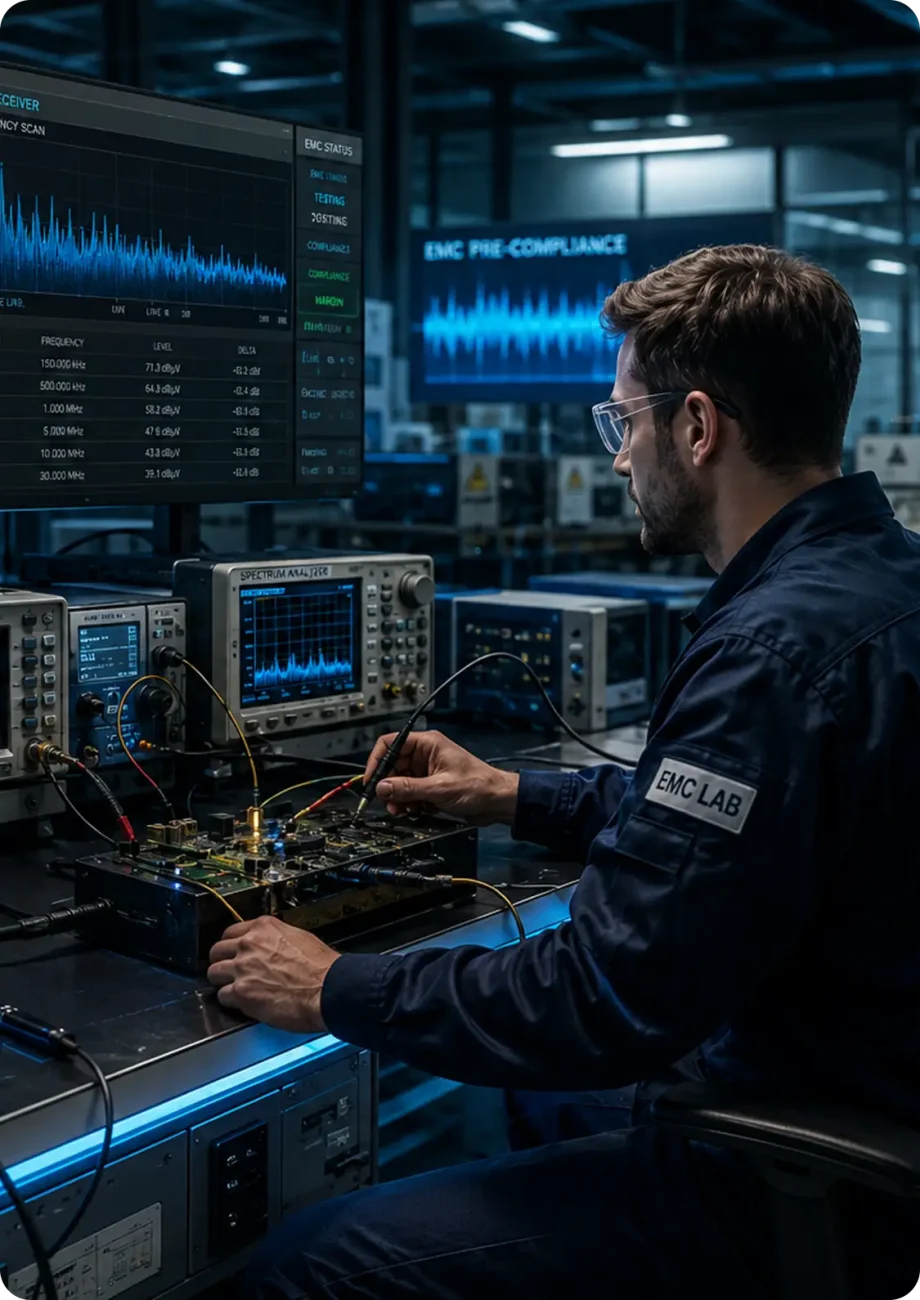
Common EMC Issues Identified During Pre-Compliance
01
Excessive Switching Noise
Switching converters and digital electronics are major EMI sources.
Common causes include:
- Fast switching edges
- Improper return paths
- Poor decoupling
- Layout issues
02
Grounding Problems
Improper grounding can create:
- Ground loops
- Common-mode currents
- Increased emissions
- Noise coupling
Proper grounding architecture is fundamental for EMC success.
03
Cable Radiation
Cables often become unintended antennas.
Typical problems include:
- Long unshielded cables
- Poor connector grounding
- Improper cable routing
- Common-mode currents
04
Shielding Deficiencies
Poor enclosure shielding may lead to:
- RF leakage
- Emissions failures
- Immunity vulnerabilities
Pre-compliance testing helps identify shielding weaknesses before production.
Industries That Benefit from EMC Pre-Compliance

Medical Devices
Medical equipment must comply with strict EMC requirements such as:
- IEC 60601-1-2
- Wireless coexistence requirements
- FDA EMC expectations
EMC robustness is critical because interference may directly impact patient safety.
Automotive Electronics
Modern vehicles contain dozens of electronic control units (ECUs), wireless modules, radar systems, infotainment platforms, and ADAS technologies.
- CISPR 25
- UNECE R10
- ISO 11452
- ISO 7637
Pre-compliance testing is essential before full vehicle integration.
Industrial Equipment
Industrial systems often operate in electrically noisy environments involving:
- Motors
- Variable-frequency drives
- Inverters
- High-current systems
EMC validation improves operational reliability and reduces field failures.
Wireless and IoT Devices
Wireless products face increasingly complex EMC challenges due to:
- Multiple radios
- Compact designs
- High-speed interfaces
- Coexistence requirements
Wireless products must also meet applicable regulatory requirements, including:
- FCC Part 15 pre-compliance testing
- RED
- ISED
- <a href=”https://stancermtl.com/ce-marking-global-product-compliance/”>CE marking</a>
The EMC Pre-Compliance Process at Stancer Testing-Lab
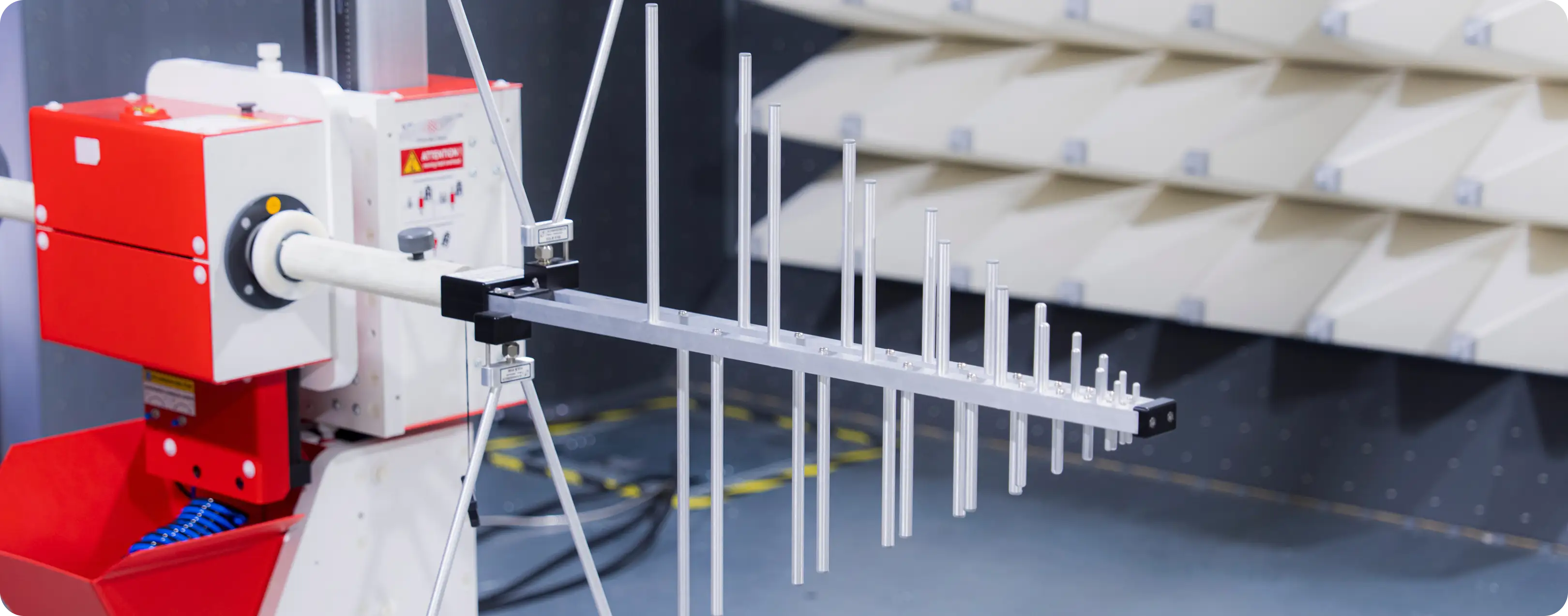
Step 1 — Technical Review
Our EMC engineers review:
- Product architecture
- Applicable standards
- Target markets
- Frequency technologies
- Cabling configuration
- Power topology
This helps establish a customized test strategy.
Step 2 — Preliminary EMC Evaluation
We perform emissions and immunity scans to identify:
- High-risk frequencies
- Failure margins
- Coupling mechanisms
- Potential compliance issues
Step 3 — Engineering Diagnostics
Unlike simple pass/fail testing, EMC pre-compliance involves extensive troubleshooting.
Our engineers help identify:
- Root causes
- Dominant noise paths
- PCB layout issues
- Cable coupling mechanisms
- Shielding deficiencies
Step 4 — Mitigation Recommendations
We provide practical engineering recommendations such as:
- Filter improvements
- Ferrite selection
- Shielding strategies
- PCB modifications
- Grounding improvements
- Cable management optimization
Step 5 — Verification Testing
Once modifications are implemented, the product is retested to validate improvements and improve confidence before formal compliance testing.
Why Choose Stancer Testing-Lab for EMC Pre-Compliance Testing?
Advanced EMC Infrastructure
Stancer Testing-Lab operates advanced EMC and RF testing facilities designed to support both pre-compliance and compliance activities across multiple industries.
Capabilities include:
- Semi-anechoic chamber testing
- Conducted and radiated emissions
- Immunity testing
- Automotive EMC testing
- RF and wireless evaluations
- High-frequency measurements
- Near-field diagnostics
Fast Turnaround
We understand the importance of aggressive development schedules and rapid product commercialization.
Our engineering team focuses on:
- Flexible scheduling
- Fast diagnostics
- Rapid troubleshooting
- Efficient retesting
Engineering-Oriented Support
Our approach goes beyond pass/fail testing.
We collaborate directly with engineering teams to:
- Analyze EMC mechanisms
- Resolve root causes
- Improve design robustness
- Accelerate certification readiness
One-Stop EMC Testing Partner
We support manufacturers from early development through final certification testing.
Services include:
- EMC pre-compliance
- EMC compliance testing
- RF testing
- Regulatory guidance
- CE/FCC/ISED preparation
- Automotive EMC support
EMC Challenges in Modern Electronics
Modern electronic products are becoming increasingly difficult to certify. As devices become faster, smaller, and more connected, manufacturers face a growing number of electromagnetic compatibility (EMC) challenges that can lead to compliance failures, redesigns, and project delays.
1- Higher Switching Frequencies
Modern processors, power converters, and switching regulators operate at increasingly higher frequencies, generating broader electromagnetic emissions that are more difficult to control and mitigate.
2- Increased Wireless Integration
Today’s products often combine multiple wireless technologies within a single device, including:
- Wi-Fi
- Bluetooth
- LTE
- 5G
- GNSS
- NFC
The coexistence of multiple radios increases the complexity of EMC design and wireless performance validation.
3- Compact Product Design
Miniaturization reduces the spacing between electronic components, increasing electromagnetic coupling, crosstalk, and unintended radiation paths that can negatively affect EMC performance.
4- High-Speed Digital Interfaces
High-speed interfaces such as the following are common sources of electromagnetic emissions when PCB layout, grounding, or shielding are not properly implemented:
- USB 3.x
- Ethernet
- PCI Express (PCIe)
- HDMI
- DDR Memory
Proper EMC design practices combined with early pre-compliance testing help identify these issues before formal certification, reducing development costs and accelerating time to market.
Proper PCB Layout
- Controlled return paths
- Short current loops
- Proper layer stack-up
- Decoupling optimization
Effective Shielding
- Continuous conductive enclosures
- Proper gasket implementation
- Shield termination techniques
Cable Management
- Shielded cables
- Proper grounding
- Ferrite integration
- Routing optimization
Early EMC Validation
The earlier EMC testing begins, the easier and cheaper it becomes to resolve issues.This is one of the strongest reasons why EMC pre-compliance testing has become a standard best practice across modern electronics industries.
Design Best Practices for EMC Success
Manufacturers can improve EMC performance by implementing:
Partner with Stancer Testing-Lab
Send your product description, target markets, known EMC concerns and preferred schedule. Use our EMC & RF Client Information Sheet to organize the configuration before booking.
What Should We Bring?
- A working prototype and representative power supplies.
- Intended cables, peripherals, loads and accessories.
- Firmware and instructions for repeatable operating modes.
- Performance criteria and a way to monitor the relevant functions.
- Previous results and proposed filters, ferrites or shielding changes.
What Determines EMC Pre-Compliance Testing Cost?
Cost depends on the investigation, selected measurements, operating modes, setup complexity and engineering time. For help with planning your EMC testing budget, review the costs associated with laboratory work, engineering investigation and retesting. A targeted pre-scan and a broad emissions-and-immunity program involve different amounts of work. Share your priorities for a quotation defining the session and any agreed retesting.
Can We Investigate a Failed EMC Test?
Yes. Bring the report, recorded configuration and a sample that reproduces the issue. We can agree targeted troubleshooting, compare corrective changes and identify what needs to be verified in the formal program.
Review our laboratory capabilities and accredited testing scope. For the subsequent formal program, see EMC compliance testing or RF and wireless testing.
Discuss your pre-compliance investigation with our engineering team.
Plan your testing
Let’s move your product toward market.
Tell us about your product, testing needs, and target markets. Our technical team will help define the scope and prepare a tailored quotation.