RF Testing Preparation: Samples, Software and Documentation
Prepare the device, its control software and supporting information before the RF test session. The laboratory needs to reproduce the selected operating conditions and identify the configuration associated with each result. Confirm the required samples and test modes against the agreed program before shipping.
Describe the product and requested assessment
List the target markets, radio technologies, frequency bands, output power settings and antenna arrangements. Identify product variants, simultaneous radio operation and any previously approved modules. Supply the module identification and integration information so the laboratory can review what work is needed for the finished product.
Prepare the samples for measurement
| Arrangement | Sample preparation |
|---|---|
| Measurement through an RF connection | Agree an accessible antenna-port connection or suitable modified sample with the laboratory. |
| Measurement using the product antenna | Provide a representative assembled product with its intended antenna and enclosure. |
| Receiver evaluation | Provide the control and monitoring arrangements required to assess reception. |
| Cellular evaluation | Confirm access for the agreed test SIM or equivalent configuration, and the required control tools. |
Identify each sample and record its hardware and firmware versions. Tell the laboratory before the session if the antenna port is inaccessible or if a sample must be modified to permit measurements.
Check firmware and radio controls
Verify that the supplied instructions allow the operator to reach the modes needed by the test plan. Depending on the technology, these may include channel selection, output power, modulation, bandwidth, data rate, transmitter operation and receiver-only operation. Frequency-hopping devices may need additional control arrangements.
Test the commands on the actual sample. Include configuration files, required utilities and a clear description of how to start, change and stop each operating mode. Document simultaneous-transmission configurations where they form part of the program.
Provide the supporting equipment
Pack the specified power supplies, chargers, batteries, adapters and data cables. Supply any requested laptop with working drivers and control software. Where reception must be evaluated, agree whether a companion device and an indication of packet errors or throughput are required.
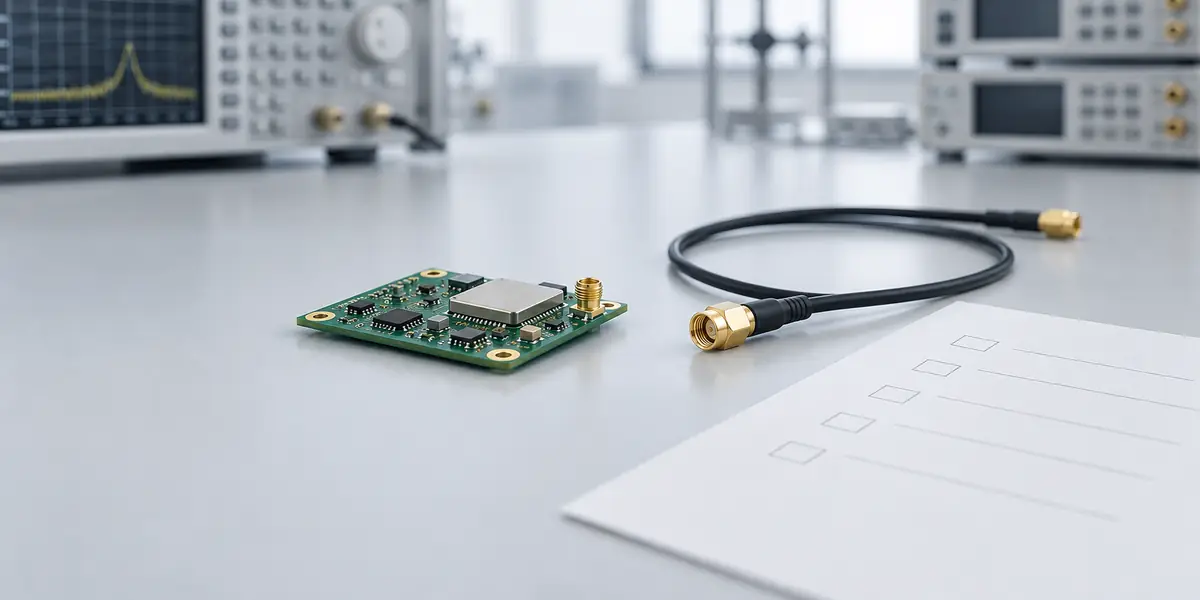
RF testing preparation checklist
- Product description, intended markets and radio specifications are supplied.
- Samples match the agreed conducted and radiated arrangements.
- Hardware, firmware and antenna configurations are identified.
- Required channels, settings and operating modes can be selected reliably.
- Instructions, software, configuration files and drivers are included.
- Power accessories, cables and any companion device are packed.
- Module approval information and relevant product documentation are available.
Avoid delays at the laboratory
Missing control software, an unavailable test mode or an unsuitable RF connection can prevent the planned measurements. Check the complete setup before dispatch and identify a technical contact who can answer configuration questions during testing.
Review the sample arrangements with Stancer Testing-Lab before shipment. Related information: RF testing and ISED testing and Canadian equipment compliance.