

FDA EMC Guidance for Medical Devices
Medical Device EMC Testing
Manufacturers preparing for IEC 60601-1-2 evaluation can review Stancer’s dedicated medical device EMC testing services, including emissions, immunity, essential-performance monitoring, and pre-compliance support.
Electromagnetic compatibility (EMC) testing is a critical part of medical device design, validation, and regulatory approval. In practical terms, EMC testing helps confirm that medical equipment can operate safely and reliably in real electromagnetic environments, while keeping its own electromagnetic emissions under control. For medical manufacturers, effective EMI testing and RF testing directly support patient safety, device reliability, and regulatory clearance.
In the United States, the FDA expects medical device submissions to address EMC and radio frequency risks through recognized international standards and a risk-based validation approach. Manufacturers must support their submissions with structured test data aligned with standards such as IEC 60601-1-2, which remains the global benchmark for medical device EMC performance.
Regulatory Framework for Medical Device EMC Testing
Medical devices are regulated under the Federal Food, Drug, and Cosmetic (FD&C) Act. Products that include electronic circuitry, such as infusion pumps, patient monitors, imaging systems, diagnostic equipment, and wearable therapeutic devices, must demonstrate both controlled electromagnetic emissions and sufficient immunity to external disturbances.
- Controlled electromagnetic emissions through EMI testing, including conducted emissions testing and radiated emissions testing.
- Immunity to external disturbances through RF immunity, transient immunity, electrostatic discharge, surge, and conducted RF evaluations.
Although the FDA does not impose a proprietary EMC test procedure, it recognizes internationally harmonized standards as strong evidence that electromagnetic risks have been identified, evaluated, and properly controlled. This is especially important when a device has essential performance that could affect diagnosis, therapy, monitoring, alarm functions, or patient safety.
- IEC 60601-1-2 – Medical electrical equipment — EMC requirements and tests.
- IEC 61000-4 series – Electromagnetic compatibility testing and measurement methods.
- ISO 14971 – Risk management for medical devices.
By aligning the EMC evaluation with these standards, manufacturers strengthen their regulatory position and reduce the risk of interference-related safety or performance issues during clinical use.
IEC 60601-1-2: Core Standard for Medical EMC Compliance
IEC 60601-1-2 is the foundation of medical device electromagnetic compatibility compliance worldwide. This collateral standard supports the broader electrical safety requirements for medical electrical equipment and defines both emission limits and immunity expectations. For many medical device manufacturers, IEC 60601-1-2 is one of the most important standards in the regulatory test plan.
What IEC 60601-1-2 Covers
| Area | Purpose |
|---|---|
| Emission Limits (EMI Testing) | Controls conducted and radiated emissions to reduce the risk of interference with nearby medical equipment, wireless systems, communication networks, and sensitive monitoring devices. |
| Immunity Requirements (RF Testing and Transient Testing) | Defines how the device should perform when exposed to electromagnetic disturbances, with particular attention to maintaining basic safety and essential performance. |
The immunity portion of IEC 60601-1-2 references several IEC 61000-4 test methods. Together, these methods form a structured EMC testing program for radiated, conducted, and transient electromagnetic phenomena.
- Electrostatic discharge (ESD) — IEC 61000-4-2.
- Radiated RF immunity — IEC 61000-4-3.
- Electrical fast transients (EFT/B) — IEC 61000-4-4.
- Surge immunity — IEC 61000-4-5.
- Conducted RF immunity — IEC 61000-4-6.
- Voltage dips and interruptions — IEC 61000-4-11.
Integrating EMC Testing into Risk Management
A key message in FDA guidance is that EMC validation should be risk based. Under ISO 14971, manufacturers are expected to identify electromagnetic hazards, assess the severity of potential harm, estimate the likelihood of exposure, and define appropriate mitigation strategies.
Electromagnetic disturbances such as RF fields, surge events, switching noise, electrostatic discharge, wireless coexistence problems, and power-line disturbances are realistic risk sources. Depending on the device and its clinical use, these disturbances may compromise functionality, create unsafe operating states, affect alarms, interrupt therapy, or degrade clinical performance.
- Intended use environment, including hospital, clinic, ambulance, or home healthcare conditions.
- Proximity to wireless infrastructure, mobile phones, telemetry systems, Wi-Fi, Bluetooth, and RFID sources.
- Safety classification of the device and the importance of its essential performance.
- Likelihood of exposure to EMI sources during normal and foreseeable use.
FDA reviewers typically expect detailed EMC test reports that demonstrate compliance with IEC 60601-1-2 criteria, including calibration traceability, tested configurations, operating modes, monitoring methods, deviations, and a clear justification of functional pass/fail results.
EMI and RF Testing Challenges in Healthcare Environments
Healthcare facilities are dense electromagnetic environments. Medical devices often operate near wireless transmitters, high-power equipment, switching power supplies, power-line disturbances, and portable electronics. A device may pass a basic functional test in the lab and still behave unpredictably if the EMC risk assessment does not reflect the real environment in which it will be used.
- Wi-Fi, Bluetooth, cellular, and telemetry transmitters.
- RFID systems and wireless patient monitoring networks.
- Imaging systems and high-power RF sources.
- Power-line disturbances, switching noise, and conducted RF coupling.
- Portable electronic devices used by patients, clinicians, and visitors.
A well-planned EMI testing and RF testing strategy helps confirm that medical devices maintain essential performance in these environments rather than only passing under ideal laboratory conditions.
Practical compliance note: For connected medical devices, EMC testing, RF testing, wireless coexistence, software modes, and risk management should be planned together. Treating these areas separately often creates avoidable retesting and documentation gaps.
Global Regulatory Considerations: EMC Directive and RED Directive
While FDA guidance supports U.S. market access, manufacturers selling internationally must also consider European regulatory requirements. In Europe, EMC obligations are commonly addressed through the EMC Directive and, for products with intentional radio transmitters, the Radio Equipment Directive (RED).
- EMC Directive (2014/30/EU) – Applies to electromagnetic compatibility for many electrical and electronic products in Europe.
- RED Directive (2014/53/EU) – Applies to devices that incorporate intentional radio transmitters.
For wireless medical devices, compliance with IEC 60601-1-2 and the RED Directive may both be required. A structured EMC and RF testing program supports CE marking and helps manufacturers prepare for global market access.
Emerging Trends in Medical EMC Testing
The electromagnetic landscape in healthcare is changing quickly. Medical devices are becoming more connected, more mobile, more software driven, and more dependent on wireless communication. This makes electromagnetic compatibility validation more complex than traditional baseline testing.
- 5G, Wi-Fi 6/7, Bluetooth, and higher-frequency radio systems.
- Increased telemedicine and connected home healthcare equipment.
- Battery-powered, portable, and wearable medical electronics.
- Software-driven dynamic operating modes and cloud-connected functions.
- Greater use of wireless modules that still require final product-level EMC and RF validation.
These trends require adaptive testing strategies that look beyond minimum compliance and account for how the device will actually be used in clinical and home healthcare environments.
What Accredited EMC Testing Laboratories Provide
Professional EMC laboratories supporting medical device validation provide both the test infrastructure and the technical documentation needed for regulatory submissions. Early involvement with an experienced lab can reduce redesign risk, improve the chance of first-pass success, and help keep the submission timeline on track.
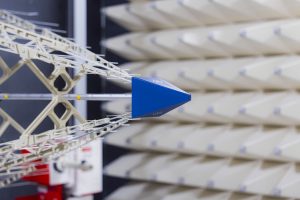
- Semi-anechoic chambers for radiated EMI testing and RF immunity testing.
- Conducted emission measurement systems for AC and DC power ports.
- Surge, EFT, voltage dips, and transient generators.
- ESD test environments for direct and indirect discharge testing.
- Automated IEC 61000-4 compliant setups.
- Comprehensive regulatory-grade documentation for submissions and technical files.
By combining accredited test capabilities with practical engineering guidance, Stancer Testing-Lab is an EMC/EMI and RF/Wireless Testing Lab that helps manufacturers identify issues earlier, document results clearly, and move more efficiently toward regulatory approval. As an ISO/IEC 17025 accredited testing laboratory, Stancer supports medical device manufacturers with EMC testing, RF testing, pre-compliance troubleshooting, and regulatory planning for North American and international markets.
Frequently Asked Questions About Medical Device EMC Testing
What is medical device EMC testing?
Medical device EMC testing evaluates whether electronic medical equipment can operate safely and maintain essential performance in the presence of electromagnetic disturbances, while also limiting its own conducted and radiated emissions. It is a key part of regulatory approval, risk management, and patient safety validation.
What types of medical devices does FDA EMC guidance apply to?
FDA EMC guidance applies to electrically powered medical devices and accessories that contain electrical or electronic circuitry, including in vitro diagnostic products, patient monitoring equipment, infusion systems, wearable medical devices, therapeutic devices, and diagnostic equipment.
What is the main EMC standard for medical devices?
IEC 60601-1-2 is the primary EMC standard for medical electrical equipment. It defines emission limits and immunity requirements to help ensure that medical devices maintain basic safety and essential performance when exposed to electromagnetic disturbances.
What is essential performance in medical EMC testing?
Essential performance refers to the device functions that must remain within acceptable limits to avoid unacceptable risk. During EMC testing, the manufacturer must define which functions are essential and demonstrate that they do not degrade in a way that could affect safety or clinical performance.
Which EMC tests are commonly required under IEC 60601-1-2?
Common tests include radiated emissions, conducted emissions, electrostatic discharge, radiated RF immunity, conducted RF immunity, electrical fast transients, surge immunity, voltage dips, and voltage interruptions. The final test plan depends on the device, ports, power supply, intended use environment, and applicable risk analysis.
How should a manufacturer define the intended use environment for EMC purposes?
Manufacturers usually define the environment based on how and where the device will be used, such as a professional healthcare facility, home healthcare environment, emergency medical services environment, or special environment with unusual electromagnetic conditions.
Does a wireless medical device need both EMC testing and RF testing?
Yes. Wireless medical devices typically require EMC testing to address emissions and immunity, and RF testing to evaluate radio transmitter performance, spectrum compliance, spurious emissions, and regulatory requirements such as FCC, ISED, or CE RED obligations.
What information should be included in a premarket submission regarding EMC?
A premarket submission should include device characteristics, intended use environments, operating modes, power supply details, ports and cables, essential performance definitions, electromagnetic disturbance risks, test standards used, test reports, deviations, modifications, and a clear explanation of pass/fail criteria.
What should manufacturers do if a device was modified during EMC testing?
If a device was modified in order to pass EMC testing, the manufacturer should document the changes in detail and ensure that the final production design reflects the tested configuration. The final test report and regulatory submission should clearly identify the configuration that passed.
Why is broadband radiated emission a concern during EMC testing?
Broadband emissions are often harder to diagnose than narrow harmonic peaks from a digital clock. Because they indicate impulsive or switching noise spread across the spectrum, they can be difficult to trace to a single source and may complicate compliance troubleshooting.
What happens if a medical device emission level is close to the regulatory limit?
A design that sits too close to the limit has little compliance margin. Small changes in components, cable routing, production tolerances, accessories, firmware modes, or power supply behavior could push later units over the limit during radiated or conducted emissions testing.
When should medical device EMC pre-compliance testing begin?
Pre-compliance testing should begin before the design is frozen. Early testing can identify emissions, immunity, grounding, shielding, cable, and wireless coexistence issues while the PCB layout, enclosure, firmware modes, and power architecture can still be adjusted efficiently.
How can Stancer Testing-Lab help with medical device EMC compliance?
Stancer Testing-Lab is an EMC/RF Test Lab accredited to ISO 17025 and supports medical device manufacturers with dedicated Medical Device EMC Testing, RF testing, radiated and conducted emissions testing, immunity testing, ESD testing, pre-compliance troubleshooting, and regulatory planning. This helps manufacturers reduce redesign risk, prepare stronger technical documentation, and move more confidently toward North American and international market access.